Can Uromastyx Eat Romaine Lettuce? (Yes, But Read This First)

This post may contain affiliate links, meaning I may earn a small commission at no extra cost to you if you make a purchase through my links. This helps support the blog! You can read my full Affiliate Disclaimer for more details.
Introduction
If you own a uromastyx, you’ve probably stood in the produce aisle at the grocery store, wondering what’s actually safe to toss in their food bowl. Romaine lettuce is cheap, easy to find, and your uro probably loves the stuff. But is it actually good for them?
The short answer is yes, uromastyx can eat romaine lettuce. But it should not be a staple food. Romaine is mostly water and doesn’t pack much nutritional value compared to the dark leafy greens your uro actually needs. Think of romaine lettuce as an occasional filler, not the foundation of the salad.
I keep an Egyptian uromastyx myself, and feeding is one of those things that seems simple at first but gets more complicated the deeper you dig. There are staple greens, occasional greens, things to avoid, and a bunch of confusing terms like oxalates and goitrogens that nobody explains well.
So let’s clear it all up. By the end of this post, you’ll know exactly where romaine fits into your uro’s diet and what you should be feeding instead.
Why Romaine Lettuce Isn’t the Best Choice
Let me be clear about something first. Romaine lettuce is not toxic or dangerous for your uromastyx. If your uro sneaks a few bites, there’s nothing to panic about. The problem is simply that it isn’t very nutritious.
Here’s why.
It’s mostly water. Romaine lettuce is about 95% water. That sounds harmless, and in small amounts it is. But uromastyx are desert lizards. They’re built to thrive in dry conditions and get most of their moisture from the plants they eat. Feeding too much watery, low-fiber food regularly can cause loose or runny stools. It fills the belly without actually nourishing your uro.
It’s low in the nutrients your uro needs. Compared to greens like collard greens, dandelion greens, or endive, romaine falls short on calcium, fiber, and overall vitamin content. It does contain some vitamin A, C, and K, but not nearly enough to justify making it a regular part of the diet.
It’s not filling. Because romaine is so watery and light on fiber, your uro could eat a big pile of it and still not get the nutrition they actually need. It’s like eating a bowl of iceberg lettuce for dinner. You might feel full for 20 minutes, but you didn’t really eat anything of value.

One thing I want to clear up though: romaine lettuce is actually low in oxalates. I’ve seen some care guides online claim that romaine is high in oxalates, but that’s not accurate. Romaine has close to 0mg of oxalates per cup. So the oxalate concern is not the issue here. The issue is purely that it’s nutritionally empty compared to the greens your uro should be eating.
So what exactly are oxalates and goitrogens? You’ll see these two words thrown around constantly in uromastyx diet guides, so here’s the simple version. Oxalates are a natural compound found in many plants.
When your uro eats foods high in oxalates, those oxalates bind to calcium inside the body and block it from being absorbed. Over time, too many high oxalate foods can lead to calcium deficiency and metabolic bone disease. Spinach is the big one to watch out for here.
Goitrogens are another natural compound in certain plants that interfere with thyroid function by blocking iodine absorption. Foods like bok choy and mustard greens contain moderate amounts of goitrogens.
They’re not dangerous in small amounts, but you don’t want to feed them every single day. Rotating your greens takes care of both issues.
When Romaine Lettuce Is Actually Useful
Even though romaine isn’t a great staple, there are a few situations where it’s genuinely helpful.
Hydration boost. If your uromastyx looks a little dehydrated or isn’t getting enough moisture from their regular diet, mixing some romaine into their salad can help get extra water into them. The high water content that makes it a poor everyday food actually makes it useful as a hydration tool when your uro needs it.
Picky eaters. Some uromastyx are stubborn about their food. My Egyptian uro has definite preferences, and sometimes mixing in a leaf of romaine with their regular greens helps get them interested in eating the whole salad. If your uro only wants to eat romaine and ignores everything else, that’s a problem you’ll need to work on. But using it as a way to get them started on a meal is totally fine.
Variety. No single food should make up more than about 20% of your uromastyx’s diet. Tossing in some romaine once or twice a week alongside better greens adds variety without doing any harm.
What Greens Should You Actually Feed?
Here’s where the real value is. These are the greens that should make up the bulk of your uromastyx’s diet. They’re higher in calcium, packed with vitamins and fiber, and are exactly what your uro needs to stay healthy long term.
Staple Greens (Feed Daily, Rotate Between Them)
Collard greens. These are one of the best greens you can offer your uromastyx. High in calcium, great calcium to phosphorus ratio, and most uros eat them without a fuss. This is a go-to in my uro’s salad bowl.
Endive and escarole. Excellent choices with good calcium content. Most uromastyx really enjoy the texture of endive. These are easy to find at most grocery stores. (It seems like Stater Bros and Albertsons always carry it)
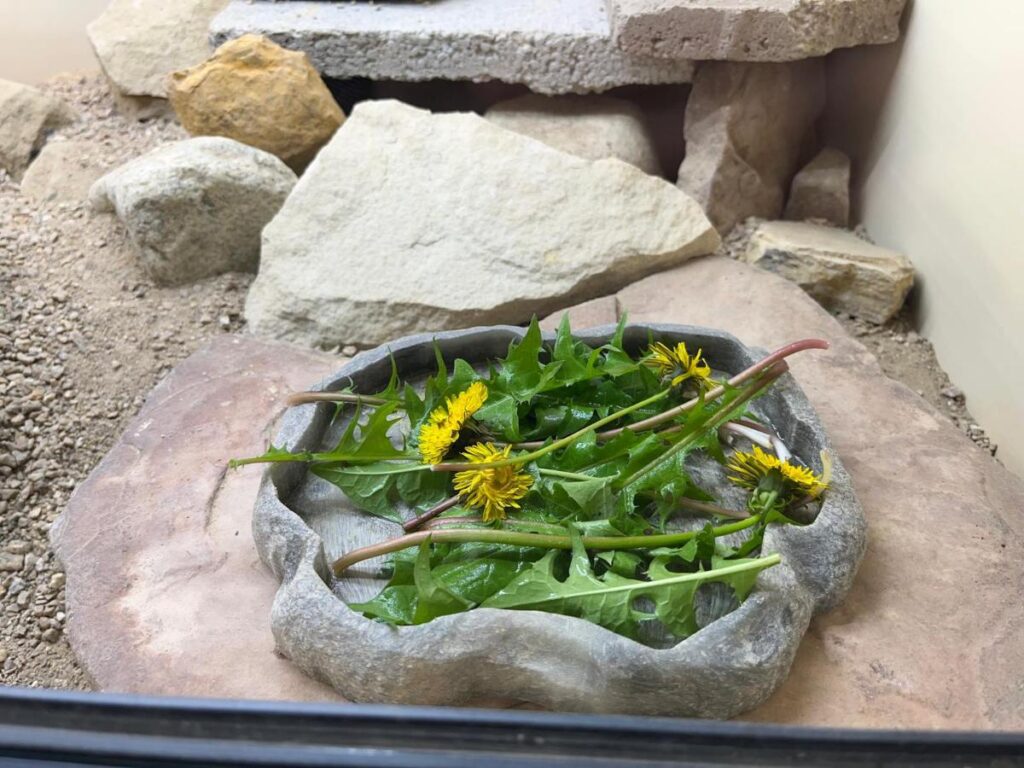
Dandelion greens. Packed with calcium and vitamin A. Both the leaves and flowers are safe, and most uros love them. You can buy dandelion greens at many grocery stores, or pick them from your yard as long as the lawn hasn’t been treated with pesticides or chemicals.
Turnip greens. Another high calcium option that works great as a staple. Use the leaves only, not the root.
Mustard greens. High in calcium with a solid calcium-to-phosphorus ratio. Some sources note they contain moderate goitrogens, so rotate them with your other staples rather than feeding them as the only green every single day.
Occasional Greens and Vegetables (A Few Times Per Week)
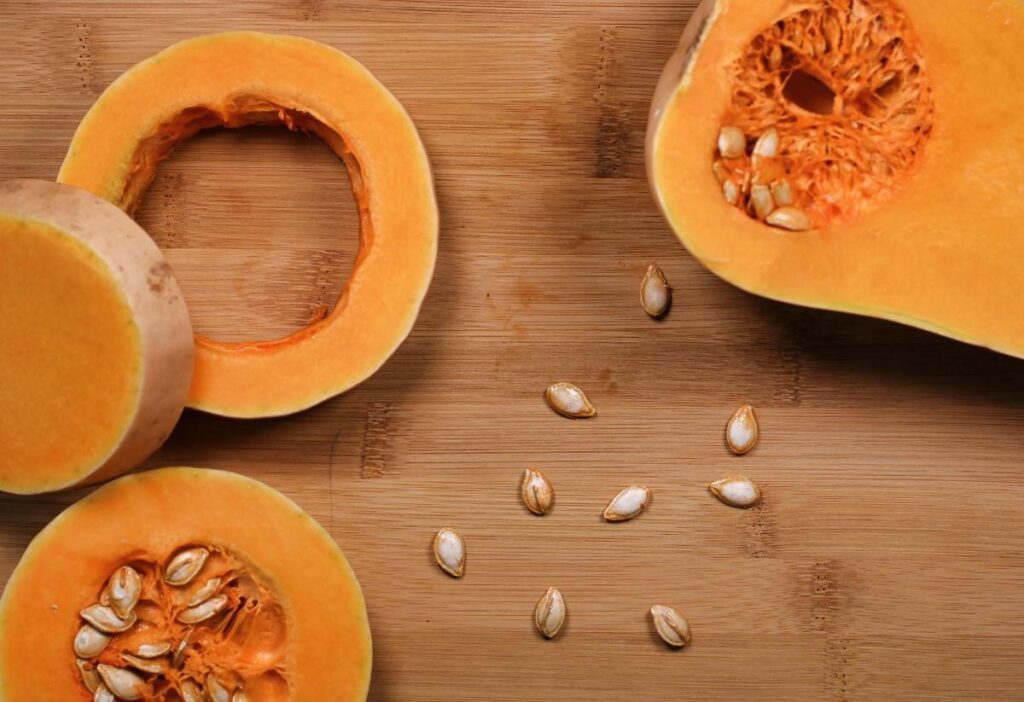
Butternut squash and spaghetti squash. These are great additions that most uros love. Shred or chop them into small pieces and mix into the salad.
Bell peppers. All colors are fine. Good source of vitamin C and they add some color and crunch to the bowl.
Bok choy. Many uros enjoy this. Feed it once a week or less since it does contain some goitrogens.
Shredded carrots. Good for vitamin A. Mix in small amounts as part of the salad.
Green beans and snap peas. Nice for variety. Offer a couple times per month.
What to Avoid Completely
Iceberg lettuce. Even worse than romaine. Almost zero nutritional value. It’s basically crunchy water with nothing in it. Never feed iceberg lettuce to your uro.
Spinach. This is the one that’s actually high in oxalates. Spinach binds calcium in the body and prevents your uromastyx from absorbing it. Eating too much spinach over time can lead to calcium deficiency and metabolic bone disease. Avoid it or feed it only very rarely.
Citrus fruits. Oranges, lemons, limes, grapefruit. All too acidic and can cause serious digestive problems in uromastyx.
Avocado. Toxic to reptiles. Never feed avocado to any reptile, ever.
What About Seeds, Lentils, and Flowers?
Greens and vegetables should make up the largest portion of your uromastyx’s diet, but you can and should add some other things for variety and nutrition.
Lentils and dried split peas. Uromastyx love these. You can leave a small bowl of dry lentils and split peas in the enclosure. Offer them one to two times a week. They’re higher in protein than greens, so don’t overdo it. You can also sprout lentils at home by soaking them overnight and rinsing them daily for 3 to 4 days. Many uros go crazy for sprouted lentils.
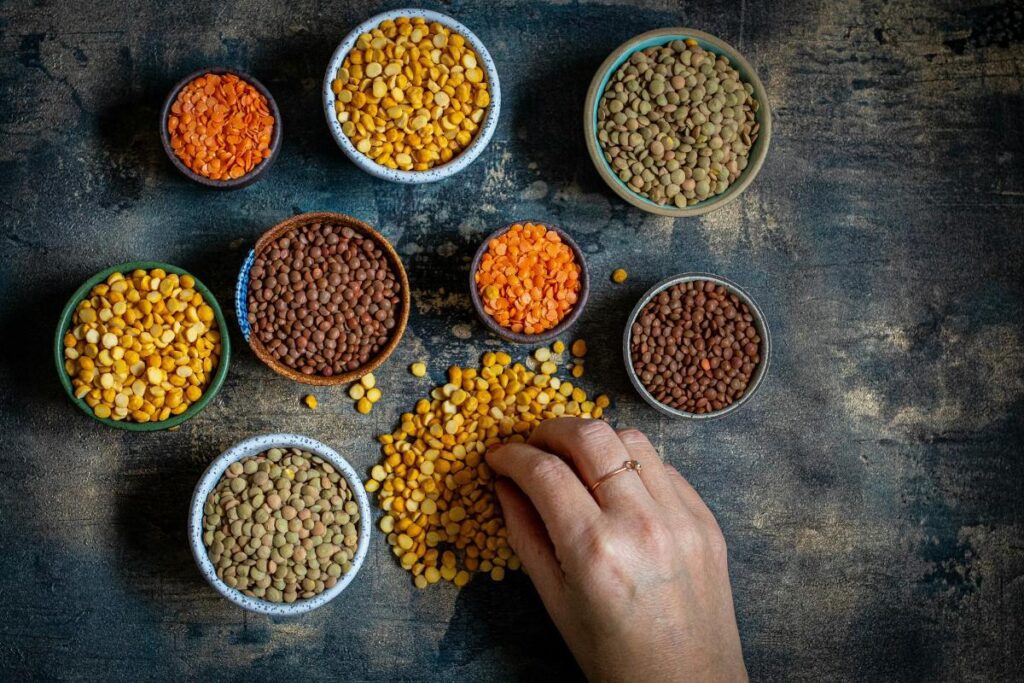
Seeds. A small seed mix can be offered a few times a week. Millet is a popular option. Don’t make seeds the main part of the diet because they’re high in fat. Think of them as a topping sprinkled over the salad, not the meal itself.
Edible flowers. Dandelion flowers, hibiscus, rose petals, nasturtiums, and pansies are all safe and most uromastyx love them. Make absolutely sure any flowers you offer are 100% pesticide free. Zoo Med’s Flower Food Topper is a convenient option if you don’t have access to fresh flowers and want to add some variety to your uro’s meals.
Bee pollen. This is an amazing appetite stimulant and a solid source of vitamins. Sprinkle a tiny bit on their salad once a week. If you have a picky uro that won’t touch their greens, bee pollen can be a game changer.
What About Fruit?
This is a topic where I see a lot of keepers getting it wrong. Some care guides online say to feed fruit “a couple times a week” or treat it like a regular part of the diet. I disagree.
Fruit should be a very rare treat for uromastyx, no more than once a month, or you can skip it entirely. Fruit is high in sugar, and uromastyx are not built to handle a lot of sugar in their diet. Too much fruit over time can lead to obesity, digestive issues, and other health problems.
If you do decide to offer fruit as an occasional treat, stick to small amounts of non-citrus options like strawberries, melon, mango, papaya, or blueberries. Chop them into tiny pieces and offer just a few bites. But honestly, your uromastyx doesn’t need fruit at all. They’ll get everything they need from a well-rounded diet of staple greens, vegetables, lentils, seeds, and flowers.
Think of fruit the same way you’d think of giving a dog a piece of candy. It won’t kill them in tiny amounts, but it’s not doing them any favors and there’s no reason to make it a habit.
Don’t Forget Supplements
Even with a perfect diet, your uromastyx needs calcium and vitamin supplementation to stay healthy.
Dust their food lightly with calcium powder without D3 a couple times per week. Use calcium powder with D3 once or twice per week as well. Use a reptile multivitamin powder a few times a month.

Rotate your supplements so you’re not giving the same one on back-to-back days. Only a light dusting is needed. You don’t need to coat the entire salad. A pinch per meal is plenty. I like to mix the powders into their salads so they don’t even notice it. (Yes, my uro is that picky!)
How I Feed My Egyptian Uromastyx
Since I keep an Egyptian uromastyx, I can share exactly what a typical feeding week looks like in my setup.
I put out a fresh salad most mornings, about an hour or two after the lights come on. My uro usually takes a little while to warm up and come out of the hide before showing any interest in food. I leave the dish in the enclosure for the rest of the day and remove it in the evening.
A typical salad for my uro is a base of collard greens and endive, with some shredded butternut squash and a few dandelion leaves mixed in. A couple of times a week, I’ll add some dry lentils or a sprinkle of millet on top. Occasionally, I’ll toss in a leaf of romaine if I have some in the fridge, but it’s never the star of the show.
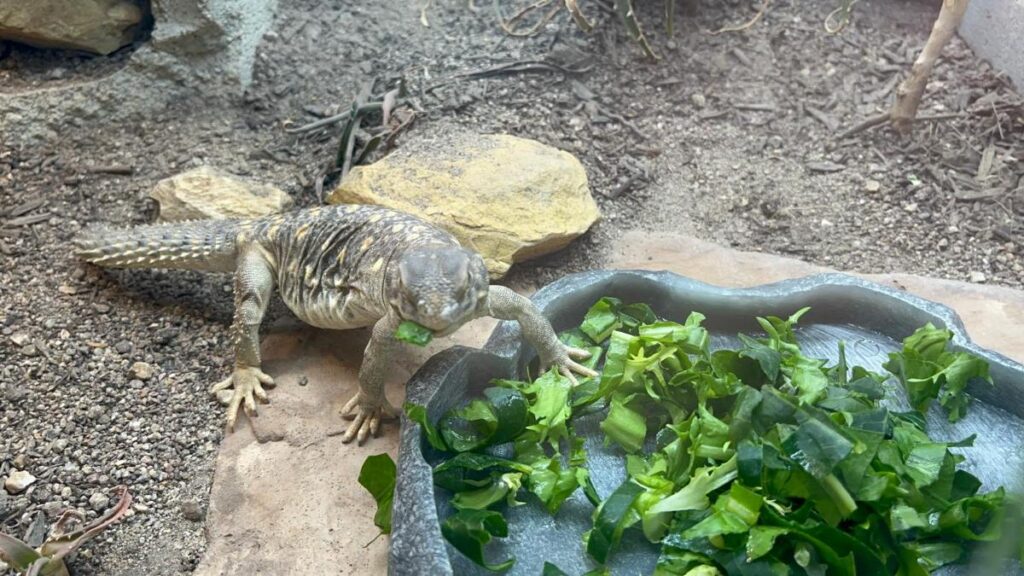
I also like to throw in some edible flowers when I can get them. Dandelion flowers from the yard are free, and my uro loves them. Just make sure your lawn hasn’t been treated with any chemicals.
As for fruit? I almost never offer it. Maybe once every few weeks I’ll give a tiny piece of melon or a single blueberry as a treat, but that’s it. My uro does perfectly fine without it.
Frequently Asked Questions
Can I feed my uromastyx only romaine lettuce?
No. Romaine lettuce alone does not provide enough calcium, fiber, or overall nutrition to keep your uromastyx healthy. It should only be an occasional part of a varied diet built around nutrient-dense staple greens like collard greens, endive, and dandelion greens.
Is romaine lettuce high in oxalates?
No. Despite what some care guides claim, romaine lettuce is actually very low in oxalates, close to 0mg per cup. The real issue with romaine is that it’s mostly water and very low in nutrients. If you’re worried about oxalates, the greens to watch out for are spinach and, to a lesser extent Swiss chard, not romaine.
Is romaine lettuce better than iceberg lettuce for uromastyx?
Yes, romaine is better than iceberg. Iceberg lettuce has almost no nutritional value at all and should never be fed to a uromastyx. Romaine at least has some vitamins and can help with hydration. But both are far below the quality of proper staple greens.
How often can I give my uromastyx romaine lettuce?
Once or twice a week mixed in with staple greens is perfectly fine. Just don’t let it become the main part of the diet.
What is the best green for uromastyx?
Collard greens are probably the single best everyday green for uromastyx. They’re high in calcium, low in oxalates, and available at any grocery store. Rotate them with endive, dandelion greens, and turnip greens for the best variety.
Can uromastyx eat fruit?
Technically yes, but fruit should be treated as a very rare treat. No more than once a month, and only in small amounts. Stick to non citrus options like melon, berries, or mango. Many experienced keepers skip fruit entirely, and uromastyx do perfectly fine without it.
Do uromastyx need insects in their diet?
Current recommendations say no. Uromastyx should be maintained on a herbivorous diet. Too much animal protein can actually cause kidney problems over time. Some keepers offer a rare insect as a treat no more than once or twice a month, but it is not necessary and many experienced keepers avoid insects entirely.
Conclusion
Here’s a quick recap of what we covered.
Romaine lettuce is safe for uromastyx to eat, but it should not be a staple food. It’s mostly water and low in nutrients. However, it is not high in oxalates like some sources claim. The real issue is just that it doesn’t bring much nutritional value.
Use romaine occasionally for hydration, to entice picky eaters, or just to add some variety to the salad bowl. Once or twice a week mixed with other greens is fine.
The real foundation of your uromastyx’s diet should be nutrient-dense greens like collard greens, endive, dandelion greens, turnip greens, and mustard greens. Supplement with squash, seeds, lentils, and edible flowers for variety.
Fruit should be treated as a very rare treat, no more than once a month, or skipped entirely. It’s high in sugar and uromastyx don’t need it.
Avoid iceberg lettuce, spinach, citrus fruits, and avocado completely.
Don’t forget to dust their food with calcium and multivitamin supplements on a rotating schedule.
Feed your uro right and they’ll reward you with years of awesome companionship. Got questions about what to feed your uromastyx? Drop them in the comments! Catch you in the next one 🙂
Recommended Products Mentioned in This Post
- Organic Green Lentils – Good to lightly sprinkle on top of uro salads
- Zoo Med Flower Food Topper – Easy way to add edible flowers to your uro’s diet without sourcing them fresh.
- Bee pollen – Great to sprinkle on top of uro salads and HIGHLY nutritious
- Fluker’s Calcium Without D3 – Dust your uro’s food with this a couple of times per week.
- Miner All Calcium With D3 – Rotate with the regular calcium once or twice per week. This is my personal favorite supplement.
- Reptile Multivitamin – Sprinkle on food once a week for overall vitamin and mineral support.