Do Crested Geckos Need a Heat Lamp? (Probably Not, and Here’s Why)

This post may contain affiliate links, meaning I may earn a small commission at no extra cost to you if you make a purchase through my links. This helps support the blog! You can read my full Affiliate Disclaimer for more details.
Introduction
If you’re coming from keeping bearded dragons or leopard geckos, the idea of a reptile that doesn’t need a heat lamp probably sounds too good to be true. But crested geckos are a whole different animal. Literally.
The short answer is no, most crested geckos do not need a heat lamp. Crested geckos thrive at room temperature, and that’s one of the biggest reasons they’re so popular with beginners. But here’s where things get a little more interesting: depending on where you live and how cold your home gets, you might need some form of supplemental heating. A heat lamp just usually isn’t the best way to go about it.
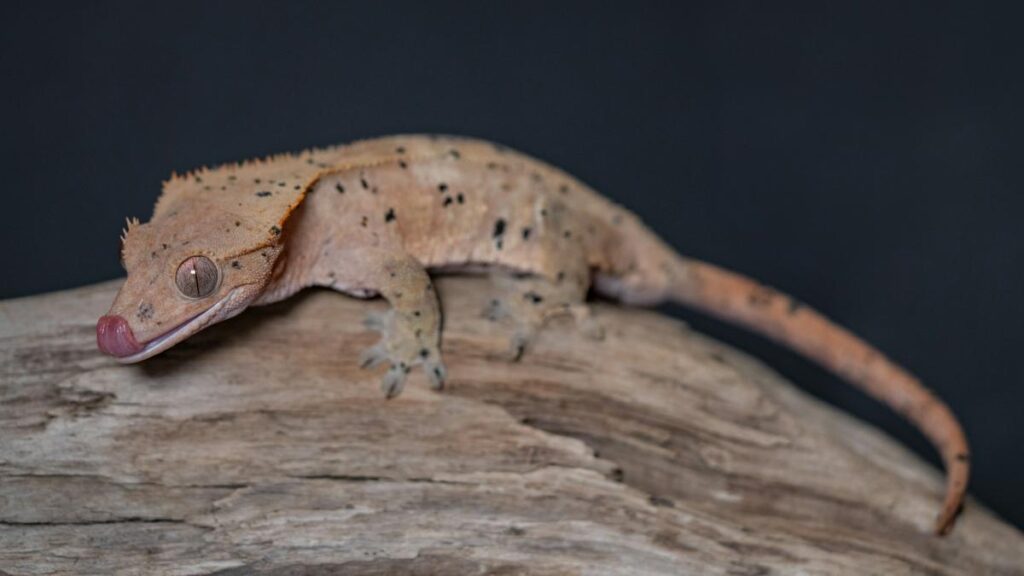
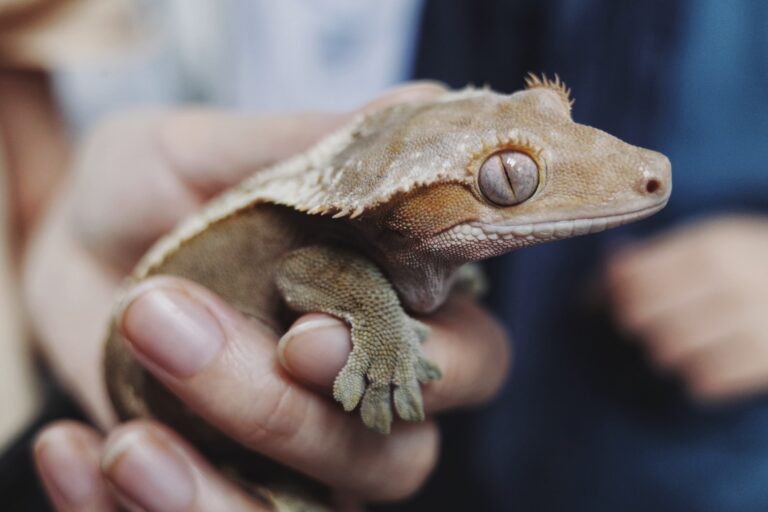
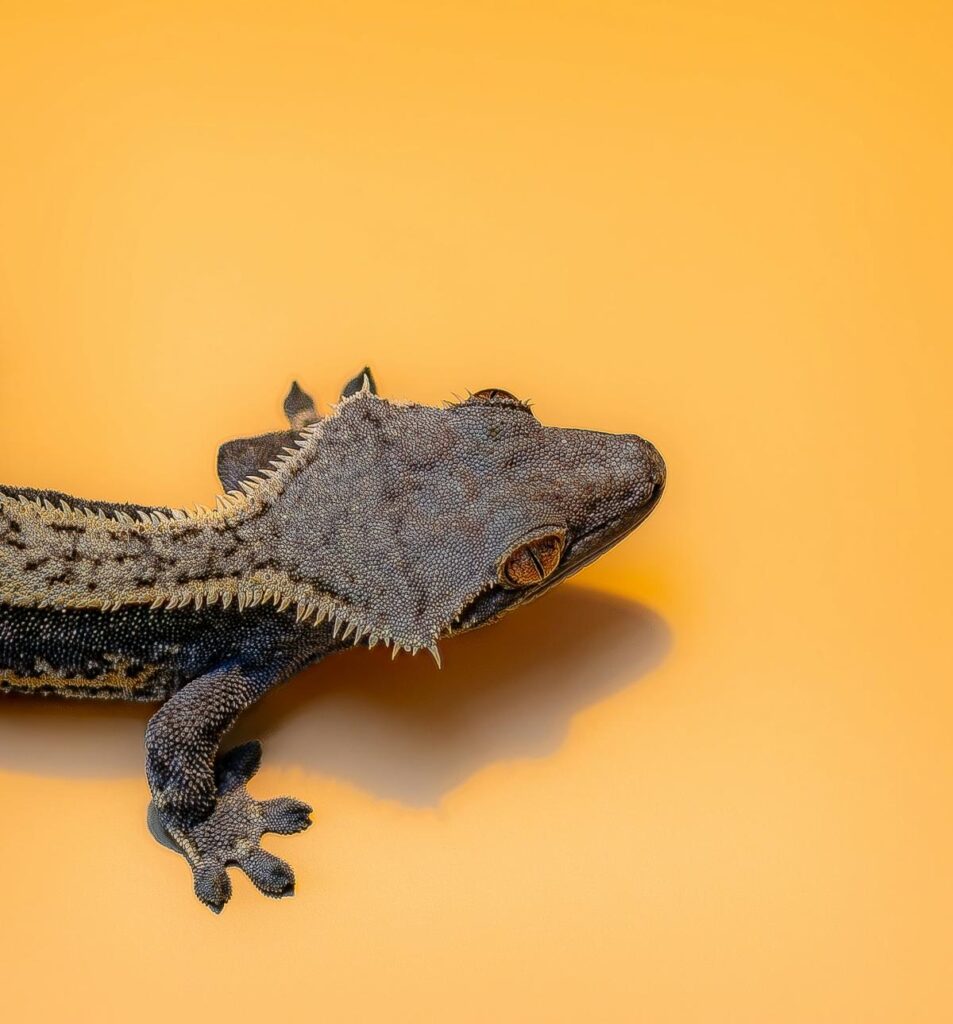
I keep a crested gecko myself, and I can tell you firsthand that their low-maintenance heating needs are one of the best things about them. If you want to learn more about why crested geckos are such awesome pets, check out my Top 7 Best Pet Reptiles for Beginners post. They’re number one on my list for good reason.
Let’s get into everything you need to know about crested gecko heating so you don’t accidentally cook your gecko. And yes, that is a very real risk with this species.
Why Crested Geckos Don’t Need Much Heat
To understand why crested geckos are the chill roommates of the reptile world, you need to know where they come from.
Crested geckos are native to New Caledonia, a group of islands in the South Pacific between Australia and Fiji. They live in subtropical forests with moderate temperatures. Not deserts. Not steamy tropical jungles. Just mild, temperate forest. The climate there stays pretty comfortable year-round, usually ranging from the mid 60s to the upper 70s Fahrenheit.

That means crested geckos evolved to be comfortable in the same temperature range that most of us keep our homes at. Unlike bearded dragons that need a basking spot of 100°F or ball pythons that need warm-side temps in the upper 80s, crested geckos are perfectly happy sitting at 72 to 78°F during the day.
They’re also crepuscular, which means they’re most active at dusk and dawn instead of during the heat of the day. In the wild, they spend their days hiding in the shade of the forest canopy and come out to hunt and explore when it cools down. They are not baskers by nature. They don’t sit under the sun to warm up like a bearded dragon does.
This is one of the things I love about keeping my crested gecko. No special basking setup, no massive heat bulbs, no worrying about hot spots. It’s about as simple as reptile keeping gets when it comes to temperature.
The Ideal Temperature Range for Crested Geckos
Here’s what you should aim for in your crested gecko enclosure.
Daytime temperature: 72 to 78°F (22 to 26°C). This is the sweet spot. Most crested geckos do best right around 73 to 75°F.
Nighttime temperature: 65 to 72°F (18 to 22°C). A nighttime drop is actually natural and healthy for crested geckos. In New Caledonia, temperatures cool down at night. Replicating this in captivity supports their natural body clock and can improve overall health.
Absolute maximum: do not let your enclosure exceed 80°F for long periods. This is the most important number in this entire article. Crested geckos are extremely sensitive to heat compared to most other pet reptiles. Sustained temperatures in the low to mid 80s can cause heat stress, loss of appetite, and a serious decline in health. Temperatures above 85°F, even for just a few hours, can cause heat stroke, neurological problems, and death. This is especially dangerous for hatchlings and juveniles.
I’m going to repeat that because it matters that much: temperatures above 85°F can kill your crested gecko. This is their biggest weakness, and it’s the number one thing new crested gecko owners underestimate.
Absolute minimum: Most experts agree you shouldn’t let temps stay below 60°F for extended periods. Short dips into the upper 50s during winter nights are usually fine. But consistent cold can slow their metabolism down to the point where their immune system weakens and digestion suffers.
Why Heat Lamps Can Actually Be Dangerous for Crested Geckos
Here’s the thing. The biggest risk with crested geckos isn’t them getting too cold. It’s them getting too hot. And that’s exactly what a heat lamp can do if you’re not extremely careful.
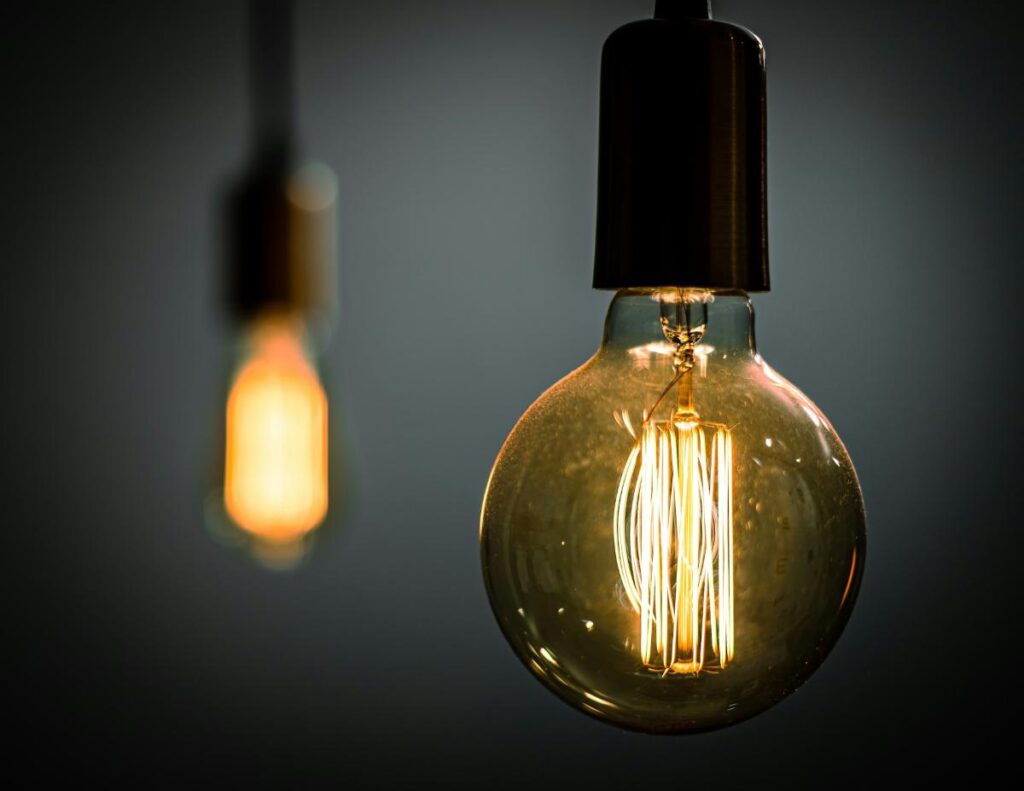
Heat lamps can overshoot fast. Most reptile heat lamps are built for desert species that need high basking temperatures. Even a low-wattage bulb can raise the temperature inside a crested gecko enclosure way higher than you’d expect. Crested gecko tanks are typically tall and not super wide, which means they heat up quickly.
They dry out the air. Crested geckos need 60% to 80% humidity. Heat lamps naturally dry out the enclosure air. This makes it way harder to keep humidity where it needs to be. Low humidity leads to stuck sheds, dehydration, and stressed out geckos.
Screen tops plus heat lamps equals a hot ceiling. Crested geckos are arboreal. They climb. A lot. They will absolutely climb to the top of their enclosure. If you have a heat lamp sitting on top of a screen lid, that screen can get dangerously hot. I’ve heard way too many stories of cresties getting burns on their feet from hot screen tops.
Does this mean you should never use any form of heat? No. It means a traditional basking heat lamp is rarely the right choice for a crested gecko.
When You Actually Need Supplemental Heating
If your home stays between 68 and 78°F year-round, congratulations! You probably don’t need any extra heat at all. Your crested gecko’s enclosure will naturally stay in their comfortable range.
But not everyone lives in that situation. Here’s when you should think about adding heat.
Your home drops below 65°F at night. This can happen in drafty homes, basements, or if you keep your thermostat low during winter. If your gecko’s enclosure is regularly hitting the low 60s or below at night, some supplemental heating is a good idea.
Your home drops below 68°F during the day. A quick dip won’t hurt. But if your daytime temps are consistently below the ideal range, your gecko’s metabolism will slow down. They’ll eat less, and their immune system won’t work as well.
You live somewhere with cold winters. If you’re in a spot that gets genuinely cold (think Canada, the northern US, or the UK), you’ll probably need supplemental heat for at least part of the year.
Better Heating Options for Crested Geckos
If you do need to add heat, here are the options I’d recommend over a traditional heat lamp.
Ceramic Heat Emitter (CHE)
A ceramic heat emitter is basically a heat lamp without the light. It screws into a regular lamp fixture and produces heat without any visible light. This is great for crested geckos because they don’t need (and shouldn’t have) heat-producing light at night. A low-wattage CHE, usually 25 watts, on a thermostat is one of the safest options out there.
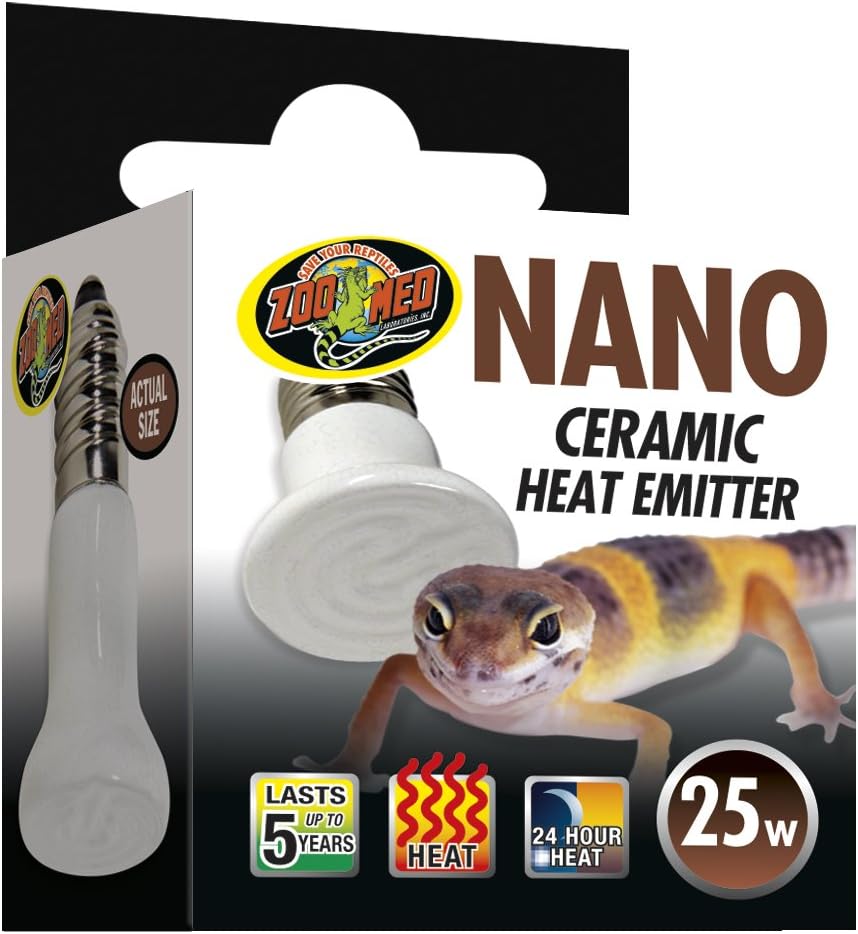
The Zoo Med Nano Ceramic Heat Emitter (25 watt) is designed specifically for smaller enclosures like the ones most crested gecko keepers use. But you absolutely MUST pair it with a thermostat like the Inkbird Temperature Controller. I can’t emphasize this enough. More on thermostats in a second.
Low Wattage Incandescent or Halogen Bulb (Daytime Only)
If your enclosure needs a little extra warmth during the day and you also want to give your gecko some natural-looking light, a very low-wattage halogen or incandescent bulb (15 to 25 watts) can work well. Something like the ZooMed Nano Basking Spot (25W) gives a gentle heat boost plus a natural light source. Turn it off at night.
The key here is monitoring. Always check the temperature at the top of the enclosure with a digital thermometer or temp gun after the light has been on for several hours. If it’s creeping above 80°F at any point, the bulb is too powerful or too close.
Under Tank Heater or Heat Mat (Side Mounted)
Some keepers use small heat mats attached to the side of the enclosure. Not the bottom, because crested geckos are arboreal and won’t get much benefit from bottom heat. A side-mounted mat can provide gentle, ambient warmth. Always use it with a thermostat and never let the surface temperature of the glass go above 85°F.
Honestly, I find this option less ideal for cresties than a CHE. But it can work in a pinch, especially for hatchling setups. Just be very careful if you decide to go this route, as heat mats can sometimes be unreliable.
Space Heater for the Room
This is the option people don’t think about. Sometimes the simplest answer is just heating the room your gecko lives in. A small space heater with a built in thermostat set to 72°F can keep the entire room at a perfect temperature without you touching the enclosure at all. This is especially useful if you keep multiple reptiles in the same room, which is what a lot of us do.
The Non-Negotiable: Always Use a Thermostat
I don’t care which heating method you choose. You MUST use a thermostat. No exceptions. Crested geckos have such a narrow range of safe temperatures that running any heat source without a thermostat is gambling with your gecko’s life.
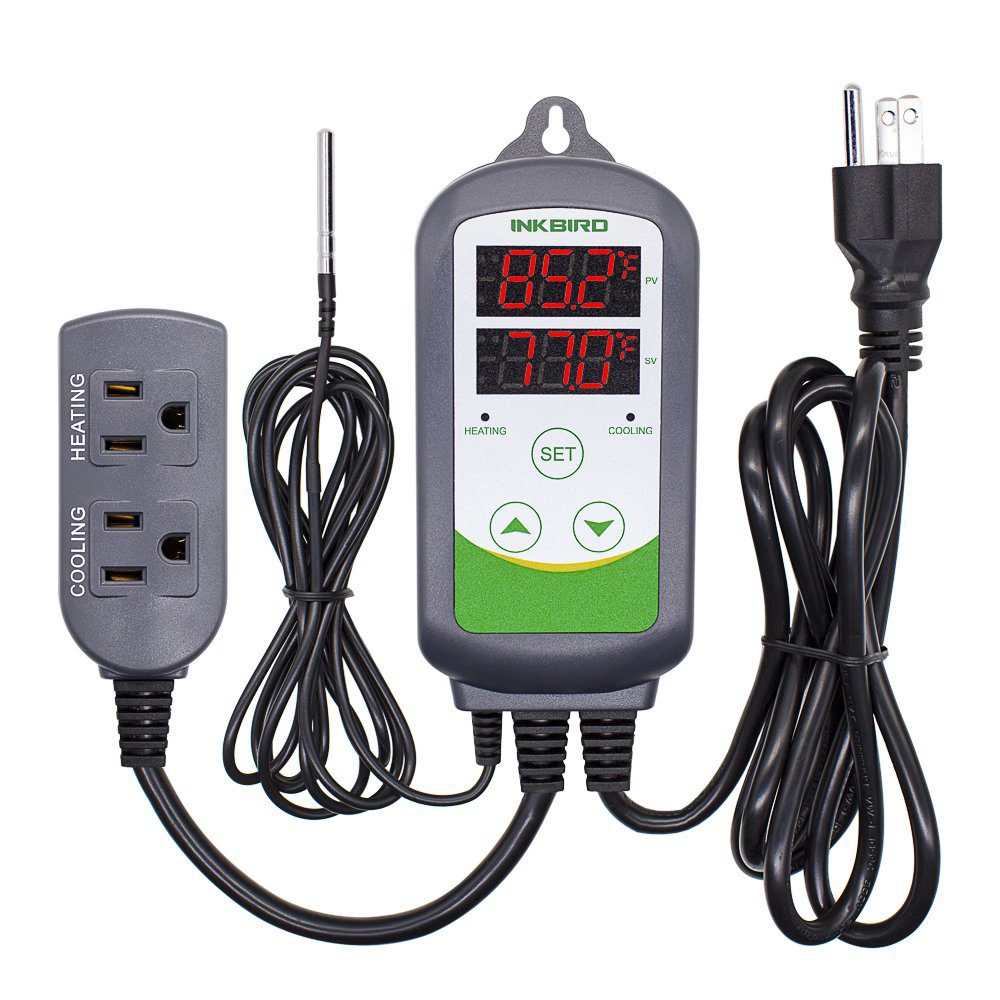
A thermostat monitors the temperature and automatically shuts off the heat source when it hits your set temp. Plug your heat source into the thermostat, set it to around 78°F to be safe, place the probe inside the enclosure, and let it do its thing.
The Inkbird Digital Temperature Controller is affordable, reliable, and works great for crested gecko setups. This is one of those pieces of equipment that pays for itself immediately by keeping your animal alive. Don’t skip it.
What About UVB Lighting?
This is a separate question from heating, but it comes up all the time in the same conversation. So let me cover it quickly.
Crested geckos do not require UVB lighting to survive. Unlike bearded dragons and other diurnal reptiles that absolutely need UVB to make vitamin D3 and absorb calcium, crested geckos can get their D3 from their diet. Quality crested gecko diets like Pangea and Repashy include D3 in the formula.
That said, there is growing evidence that providing low-level UVB (around 5% or less) can benefit crested geckos. It supports more natural D3 production and may improve overall health and activity. It’s not required, but it’s becoming a more widely recommended “best practice” among experienced keepers.
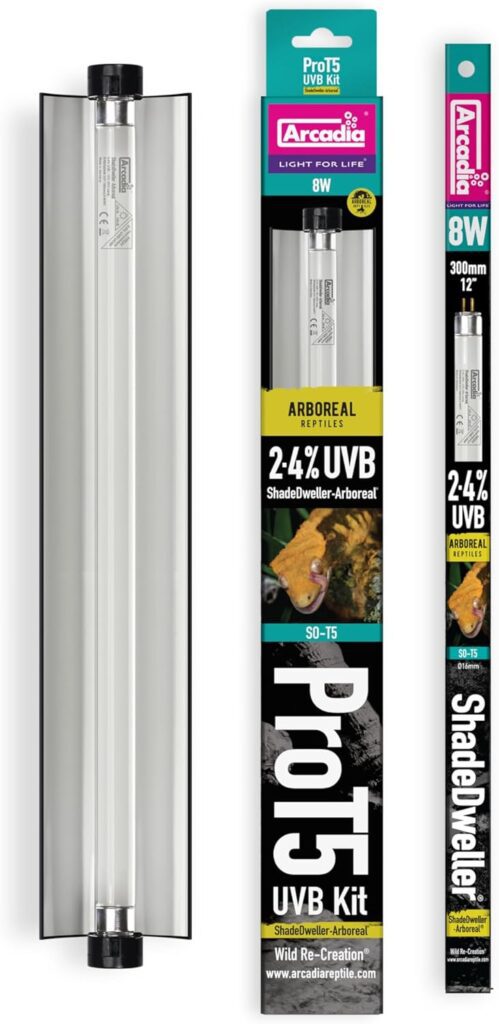
If you do add UVB, something like the Arcadia ShadeDweller UVB Kit or Zoo Med Reptisun 5.0 works well for crested geckos. Just be careful because UVB bulbs also add a little bit of heat. Monitor your temps closely after adding any new light source.
Do Crested Geckos Need Light at Night?
Nope. No light at night. Period.
I see this mistake all the time with new keepers. They buy a red or blue “nighttime” bulb, thinking it won’t bother their gecko. Wrong. Crested geckos and basically all reptiles, despite old myths, can see red and blue light. Leaving any light on at night messes with their natural rhythm and can cause stress over time.
Crested geckos are crepuscular. Their eyes work perfectly fine in the dark. Just let them have their dark time.
For a proper light cycle, aim for about 12 hours of light and 12 hours of dark. Or follow seasonal patterns with 14 hours of light in summer and 10 hours of light in winter.
How to Handle Summer Heat
Summer is actually the most dangerous time for crested gecko keepers. Not winter. If your home doesn’t have air conditioning and indoor temperatures regularly go above 80°F, you have a real problem on your hands.
Here’s what you can do to keep your crested gecko safe in the summer.
Use a fan to improve air flow in the room. Don’t point it directly at the enclosure, but circulating the air in the room helps.
Move the enclosure away from windows and direct sunlight. Even indirect sunlight through a window can heat up a glass enclosure to dangerous levels shockingly fast. I keep my crested gecko’s tank in a spot that stays naturally cool and away from any windows.
Mist more often during hot days. The evaporation helps cool the enclosure slightly while also keeping humidity up.
Use a portable AC unit if your room regularly gets above 80°F. At that point, it’s not just about comfort. It’s about your gecko’s survival.
Never leave your gecko in a car. This sounds obvious, but people do it. Cars heat up to lethal temperatures in minutes, even on mild days.
Frequently Asked Questions
Can I use a heat rock for my crested gecko?
No. Heat rocks are dangerous for almost all reptiles, and they are especially bad for crested geckos. They can malfunction and cause severe burns. Plus, crested geckos are arboreal. They don’t sit on rocks on the ground. Heat rocks have no place in any crested gecko setup.
My house stays at 72°F year-round. Do I need any heating?
No, you’re good. That’s a perfect temperature for crested geckos. Just make sure you have a digital thermometer and hygrometer inside the enclosure to confirm it actually matches your room temp. Enclosures near windows or outside walls can sometimes run warmer or cooler than the rest of the room.
What happens if my crested gecko gets too hot?
Heat stress can show up as lethargy, loss of appetite, frantic pacing, trying to escape the enclosure, gaping mouth, tail dropping, and, in severe cases, loss of coordination. If you notice any of these signs and the enclosure is warm, move your gecko to a cooler area right away and gently mist them with room temperature water. If symptoms don’t improve quickly, contact a reptile vet.
Is 80°F too hot for a crested gecko?
It’s right at the upper limit. Brief exposure is okay, but you don’t want sustained temps at 80°F. Anything above 80°F starts entering the danger zone, and above 85°F is potentially lethal. Keep it below 80°F to be safe.
Can crested geckos live without any heat source at all?
Yes, as long as your room temperature stays within 65 to 78°F. Many keepers, including myself, keep crested geckos without any supplemental heat at all. They truly are one of the lowest maintenance reptiles when it comes to temperature. That’s a big part of what makes them such a great beginner reptile.
Conclusion
Here’s a quick recap of what we covered.
Crested geckos typically do NOT need a heat lamp. They thrive at normal room temperatures between 72 and 78°F.
Heat lamps can actually be dangerous for crested geckos because they are extremely sensitive to overheating. Temperatures above 85°F can kill them.
If your home drops below 65°F, consider a ceramic heat emitter, a low-wattage bulb, or a room space heater. Always use a thermostat with any heat source.
Never use heat rocks. Never leave any light on at night, including red or blue bulbs.
Summer heat is actually more dangerous than winter cold for crested geckos. Keep them away from direct sunlight and make sure your home stays under 80°F.
UVB lighting isn’t required but is increasingly recommended as a “best practice” for better health.
Crested geckos are one of my all-time favorite reptiles to recommend to beginners. Their minimal heating needs are a huge part of that. Just keep your house comfortable for yourself, and chances are your crestie will be comfortable too.
Have questions about your crested gecko setup? Drop them in the comments. I’m always happy to help! Catch you in the next one 🙂