Can Leopard Geckos See in the Dark? (How Their Eyes Really Work)

This post may contain affiliate links, meaning I may earn a small commission at no extra cost to you if you make a purchase through my links. This helps support the blog! You can read my full Affiliate Disclaimer for more details.
Introduction
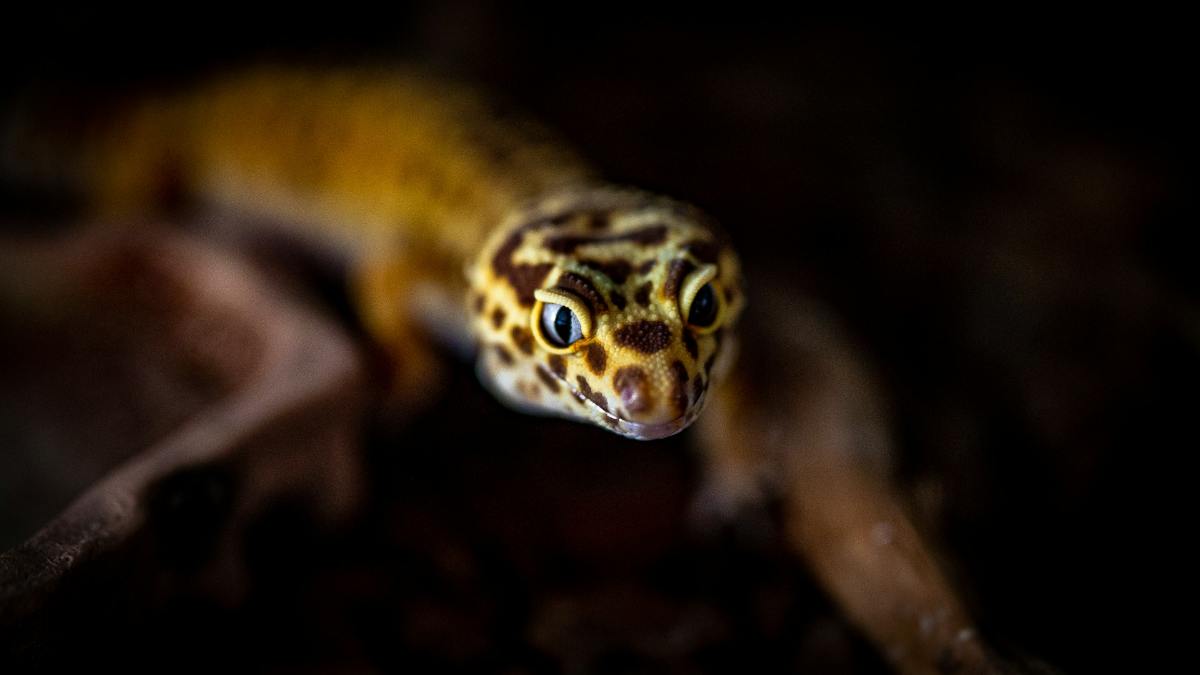
One look at a leopard gecko’s big, glassy eyes and you can probably already guess the answer to this one. Those eyes look built for the dark, and they are.
So can leopard geckos see in the dark? Yes, leopard geckos can see in the dark, and they see far better than we do. Their night vision is estimated to be hundreds of times more sensitive than a human’s in low light.
Even more impressive, they can actually see color in near darkness, which is something humans completely lose once the lights go out.
But there’s a lot of confusing and flat-out wrong information floating around online about how leopard gecko eyes actually work. Some sites claim leopard geckos have a bunch of rod cells, like cats do. That’s not accurate, and the real story is honestly way cooler.
In this post, I’ll break down exactly how leopard geckos see in the dark, whether they need a night light (spoiler: they don’t), and what all of this means for how you care for your gecko.
Are Leopard Geckos Nocturnal?
Before we talk about how they see, it helps to understand when they’re awake.
Leopard geckos are often called nocturnal, but that’s not quite right. They’re actually crepuscular, which means they’re most active during the low-light hours of dawn and dusk rather than the dead of night.
In the wild, they come from the dry, rocky regions of places like Afghanistan, Pakistan, and India, where daytime temperatures can get brutally hot.
So leopard geckos spend the hot daylight hours hiding in cool burrows and rock crevices, then come out to hunt and explore when the temperature drops at dusk and into the night.
This lifestyle is exactly why their eyes evolved to work so well in dim conditions. A gecko that hunts at dusk needs to spot a cricket in fading light, so good low-light vision became a survival tool.
How Leopard Geckos See in the Dark
Here’s where it gets interesting, and where a lot of other articles get the facts wrong.
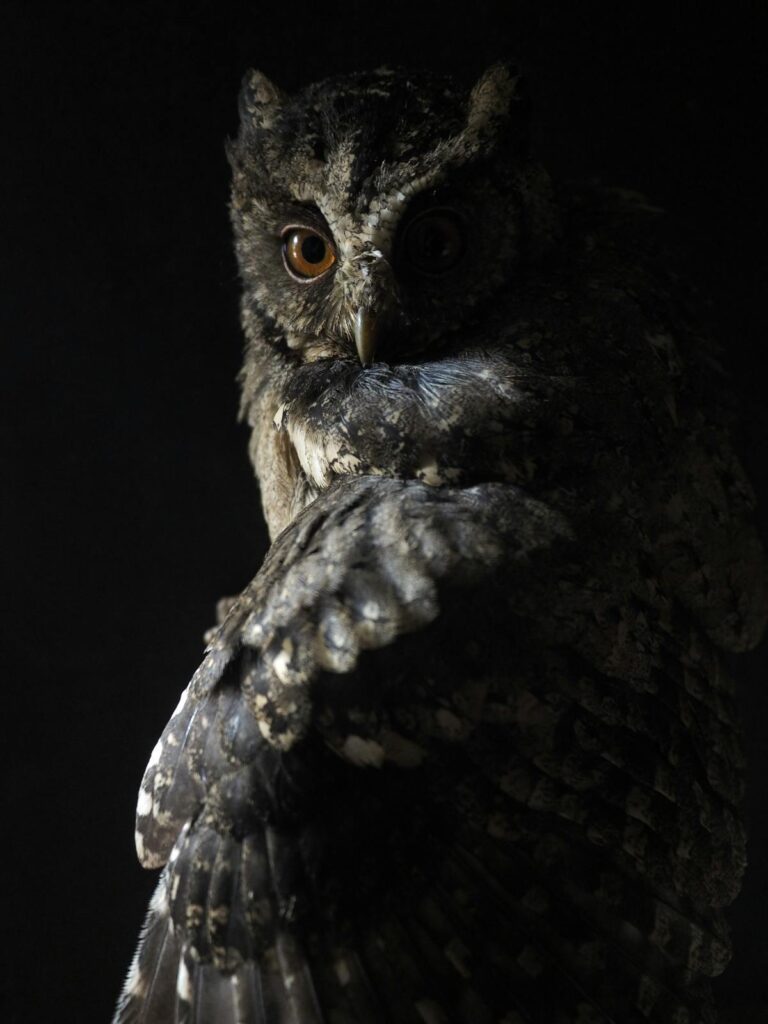
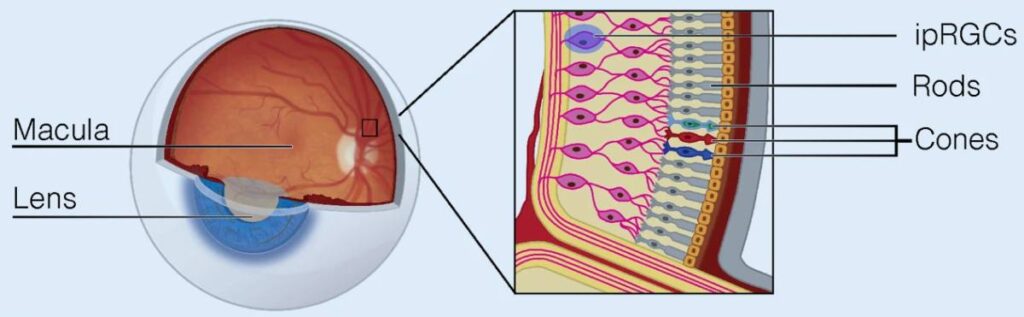
Most animals that see well in the dark, like cats and owls, rely heavily on special cells in the eye called rods. Rods are great at picking up tiny amounts of light, but they only see in black and white. That’s why your own night vision is fuzzy and colorless. In dim light, you’re seeing mostly with your rods.
Leopard geckos do it completely differently. Leopard geckos evolved from lizards that were active during the day, and those ancestors had eyes packed with cone cells, not rods.
Cones are the cells that detect color, but normally they need bright light to work. So leopard geckos are working with a cone-based eye, not a rod-based one.
Over millions of years, as leopard geckos shifted to a dusk and nighttime lifestyle, their cone cells became incredibly sensitive. Instead of trading away color vision to see in the dark like most nocturnal animals do, leopard geckos kept their color vision and just made it work in low light.
The result is an eye that can see in near darkness AND see color simultaneously, which is genuinely rare in the animal kingdom.
A few features make this possible:
Large pupils. Their big, vertical, slit-shaped pupils can open very wide in the dark to let in as much light as possible. During the bright day, those same pupils shrink down to thin slits to protect the eye.
A short focal length. The distance light has to travel inside their eye is short, which helps them gather light efficiently.
Multifocal lenses. Their lenses can focus several different wavelengths (colors) of light onto their light-sensitive cells at once. This is a big part of how they hold onto color vision in the dark.
Put it all together, and you get an eye that’s estimated to be several hundred times more sensitive to light than a human eye in dark conditions. Studies on geckos suggest they can navigate and tell colors apart on dim, moonless nights when a human would be essentially blind.
What Colors Can Leopard Geckos See in the Dark?
Leopard geckos are not colorblind, but they don’t see the same range of colors we do. Their color vision leans heavily toward the blue, green, and yellow parts of the spectrum. They’re great at telling apart shades of brown, green, and yellow, which makes sense for an animal that hunts insects against sand and rocks. They’re not as good at picking out reds.
The key takeaway is that even in very dim light, your leopard gecko is seeing a colored world, not a grayscale one. Pretty wild for an animal hunting at dusk.
Do Leopard Geckos Need a Night Light?
This is the most important practical question, and the answer is clear.
Here’s why you should skip the night light:
No, leopard geckos do not need a night light. They see perfectly well in the dark on their own, so adding a light at night does nothing helpful for them. In fact, it can actively harm them.
They don’t need it. Their night vision is already hundreds of times better than yours. A night light is solving a problem that doesn’t exist.
It disrupts their sleep cycle. Leopard geckos need a regular day and night rhythm, just like we do. Light at night confuses that rhythm and can stress them out over time, which can affect their appetite and overall health.
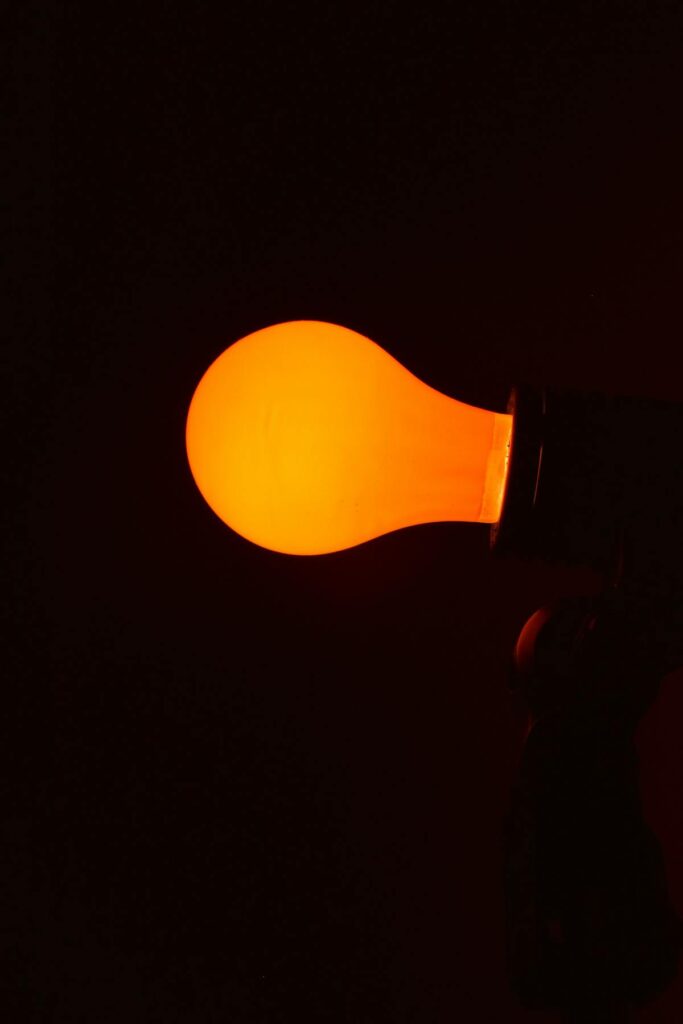
They can see colored bulbs too. A lot of beginners buy red or blue “night” bulbs, thinking the gecko can’t see them. That’s a myth. Leopard geckos can detect red and blue light, so a colored night bulb still disrupts them. There’s no such thing as a truly invisible light to a leopard gecko.
If you want to watch your gecko being active in the evening, the best move is to just observe them during those natural dusk hours when there’s still a little ambient light in the room, or use a very dim, brief light source only when you need to check on them.
For their actual enclosure, the rule is simple: lights on during the day, lights off at night.
Speaking of lights, while your gecko doesn’t need a night light, there is an ongoing debate about whether they benefit from low-level UVB during the day. If you want to dig into the lighting and heating side of leopard gecko care, that’s worth researching separately, since proper daytime setup matters a lot more than anything at night.
What This Means for Your Gecko’s Setup
Understanding that leopard geckos see in the dark actually shapes a few care decisions.
Give them dark hiding spots. Since they’re built for low light and they sleep during the day, they need dark, snug hides to retreat into when the lights are on. A proper hide setup keeps them feeling secure. If you want to learn more about their hide needs, check out my guide on whether leopard geckos need a moist hide.
Keep a proper light cycle. Aim for roughly 12 hours of light and 12 hours of dark. You can shift this slightly with the seasons, more light in summer and less in winter, to mimic their natural environment.
A simple outlet timer makes this effortless, so you never have to remember to flip the lights on and off.
Don’t feed in total darkness if you want to watch. While your gecko can absolutely hunt in the dark, their ability to track a fast-moving insect in complete blackness has limits. They rely partly on movement and dim light.
Feeding around dusk or in a dimly lit room lets you watch the hunt while still working with their natural rhythm.
Leave the night lights at the store. Save your money. You don’t need a red bulb, a blue bulb, or any nighttime light source.
Put that budget toward things that actually matter for their health, like a quality thermostat to keep their warm side at the right temperature for digestion, or proper calcium and vitamin supplements.
Frequently Asked Questions
Can leopard geckos see in complete darkness?
Leopard geckos see extremely well in very low light, far better than humans, and can even see color in near darkness. However, in truly complete darkness with zero light, their ability to track fast-moving prey becomes limited.
They rely on tiny amounts of available light, like starlight or moonlight, plus their incredible eye sensitivity. So “can leopard geckos see in the dark” is a yes, but a faint light source always helps them function at their best.
Do leopard geckos have good eyesight?
Yes, leopard geckos have excellent eyesight, especially in low light. Their large, sensitive eyes are built for spotting movement and prey at dusk and night. Their daytime vision is decent too, but their real superpower is seeing in dim conditions.
Why do my leopard gecko’s eyes glow or shine?
That shiny look you sometimes see in photos comes from light reflecting off the structures inside their highly sensitive eyes. It’s a normal part of how their eyes gather and use light. It’s the same general effect that makes cat eyes glow in a photo.
Should I use a red or blue night light for my leopard gecko?
No, please don’t. Leopard geckos can see red and blue light, so these bulbs still disrupt their sleep and natural rhythm. They don’t need any light at night to see. Keep their enclosure dark at night and provide light only during the day.
Are leopard geckos nocturnal or crepuscular?
Leopard geckos are crepuscular, meaning they’re most active during the low-light hours of dawn and dusk. They’re often loosely called nocturnal, but crepuscular is the more accurate term.
Conclusion
Here’s a quick recap of what we covered.
Can leopard geckos see in the dark? Absolutely. Their night vision is hundreds of times more sensitive than a human’s, and they can even see color in near darkness, which is rare in the animal world.
Unlike cats and owls that use rod cells, leopard geckos see in the dark using highly sensitive cone cells inherited from their day-active ancestors. This lets them keep their color vision while still seeing in dim light.
Leopard geckos are crepuscular, most active at dawn and dusk, which is exactly why their eyes evolved for low light.
They do NOT need a night light. Their vision is already incredible in the dark, and any light at night, including red or blue bulbs, disrupts their sleep cycle. Keep their enclosure dark at night and lit during the day.
Next time you catch your leopard gecko exploring in the dark, you’ll know there’s some seriously impressive biology behind those big shiny eyes.
Got questions about your leopard gecko’s vision or setup? Drop them in the comments below! Catch you in the next one 🙂
Recommended Products Mentioned in This Post
Outlet Timer — Automates your gecko’s day and night light cycle so you never have to remember.
Reptile Thermostat — Keeps the warm side at a safe, steady temperature for proper digestion.
Minerall Calcium and D3 Powder — Dust feeders to support healthy bones.