How Often Do Leopard Geckos Poop? (Complete Guide by Age)

This post may contain affiliate links, meaning I may earn a small commission at no extra cost to you if you make a purchase through my links. This helps support the blog! You can read my full Affiliate Disclaimer for more details.
Introduction
It might sound a little gross, but keeping an eye on your leopard gecko’s poop is one of the best ways to know if they’re healthy. Their droppings tell you a lot about what’s going on inside, from how well they’re digesting their food to whether something might be wrong.
So how often should a leopard gecko actually poop?
On average, baby leopard geckos poop once a day, juveniles poop every one to two days, and adults poop every 2 to 4 days. But the exact frequency depends on a few things, mainly their age, how much they eat, the temperature of their enclosure, and their overall health.
If you’ve ever stared into your gecko’s tank wondering whether it’s been too long since the last poop, this guide is for you! I’ll break down exactly how often leopard geckos poop at each life stage, what healthy poop should look like, what the warning signs are, and what to do if your gecko stops pooping altogether.
Let’s dive right in!
How Often Do Leopard Geckos Poop by Age?
The single biggest factor in how often your leopard gecko poops is their age. Younger geckos eat more often because they’re growing fast, so they also poop more often. As they get older and their growth slows, both their appetite and poop frequency slow down too.
Here’s the general breakdown.
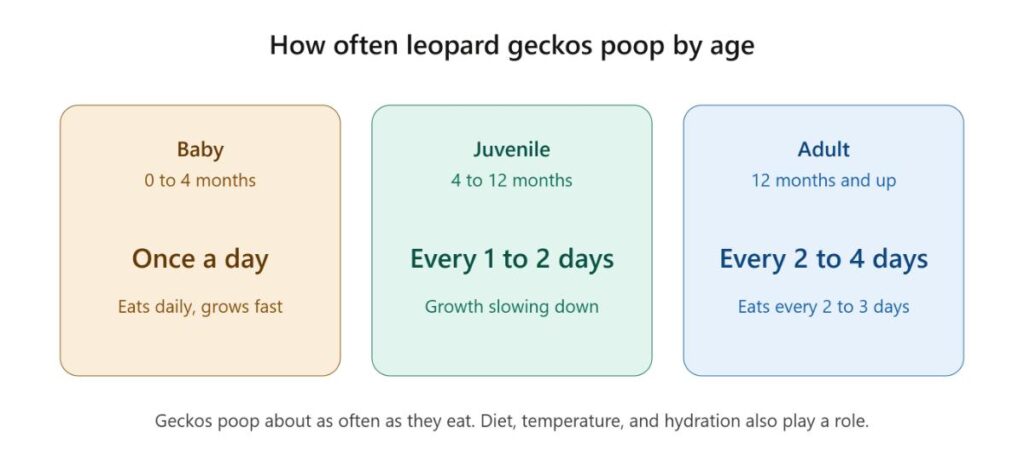
Baby leopard geckos (0 to 4 months): Once a day, sometimes even more. Babies eat every single day because they’re growing rapidly, so daily poops are completely normal and actually a good sign.
Juvenile leopard geckos (4 to 12 months): Every one to two days. As their growth starts to slow, they eat a little less often, and the poops space out a bit.
Adult leopard geckos (12 months and older): Every two to four days. Adults eat every two to three days, so pooping a couple times a week is totally normal. Some older geckos may even go a little longer between poops, and that can still be perfectly healthy.
The key thing to remember is this: leopard geckos generally poop about as often as they eat. If your adult gecko eats every other day, expect them to poop roughly every other day, maybe with a slight delay. If you feed them less often, they’ll poop less often. It’s pretty simple once you connect the two.
What Affects How Often a Leopard Gecko Poops?
Age is the biggest factor, but it’s not the only one. Here are the other things that influence your gecko’s bathroom schedule.
Diet and How Much They Eat
The more your gecko eats, the more they poop. It’s that direct. A gecko on a heavy feeding schedule will poop more often than one eating smaller meals. The type of feeder insect matters too. Easier-to-digest insects like dubia roaches and crickets move through the system at a normal pace, while harder, fattier insects like mealworms and superworms can sometimes slow things down a bit because of their tougher exoskeletons.
Enclosure Temperature
This is a big one that new keepers often overlook. Leopard geckos are cold-blooded, which means they rely on heat from their environment to digest food. If the warm side of their enclosure isn’t hot enough, their metabolism slows down, their digestion slows down, and they poop less often. Even worse, food can sit undigested in their gut, which can lead to serious problems.
Your leopard gecko needs a warm side surface temperature of around 90 to 95°F to properly digest their food. If you’re not sure what your temps are, you need to check them. An infrared temperature gun makes this easy. If your gecko isn’t pooping much, low temperatures are one of the first things to rule out.
Hydration
A dehydrated gecko can become constipated, which means fewer poops or harder, drier droppings. Always make sure your gecko has access to clean water and a proper moist hide to help them stay hydrated. If you want to learn more about why a moist hide matters so much, check out my full guide on whether leopard geckos need a moist hide.
Overall Health
A healthy gecko poops on a regular, predictable schedule. If that schedule suddenly changes, either way more or way less, it can be one of the first signs that something is off. That’s exactly why paying attention to poop frequency is so useful.
What Should Healthy Leopard Gecko Poop Look Like?
Knowing how often your gecko poops is only half the picture. You also need to know what healthy poop actually looks like so you can spot problems early.
A healthy leopard gecko dropping has two parts.
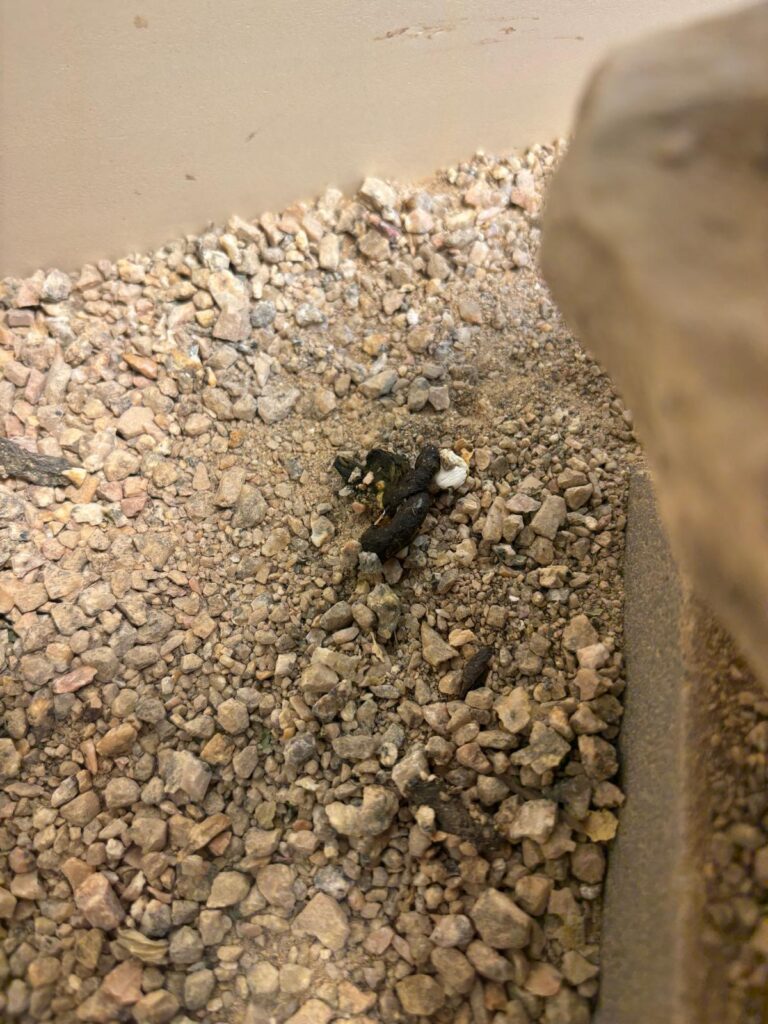
The brown or black part. This is the actual fecal matter, the digested food. It should be firm, well-formed, and brown to dark brown or nearly black in color. It should hold its shape and not be runny or watery.
The white or off-white part. This is called the urate. Since leopard geckos don’t pee like mammals do, they get rid of waste from their kidneys as a soft, solid white cap instead of liquid urine. A healthy urate is white or slightly off-white and soft but formed.
If you see both a firm brown stool and a soft white urate, congratulations, your gecko is healthy. That’s exactly what you want to see, even if the whole thing looks a little weird at first.
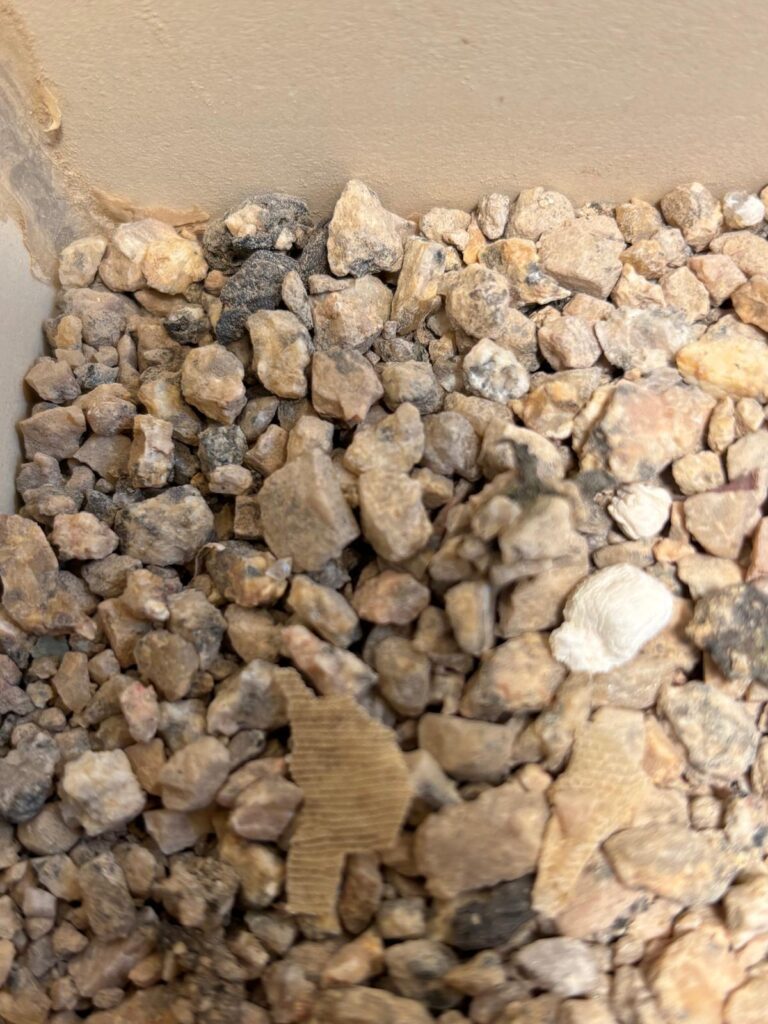
Warning Signs in Leopard Gecko Poop
Here’s where paying attention really pays off. Certain changes in your gecko’s poop can signal a health problem. Here’s what to watch for.
Runny or watery poop. Healthy poop is firm. Watery droppings can be caused by stress, a sudden change in diet, parasites, or an infection. One runny poop isn’t necessarily an emergency, but if it keeps happening, get a fecal sample checked by a reptile vet.
Yellow or discolored urates. A healthy urate is white or off-white. If the white part turns yellow, orange, or looks chalky and hard, that’s often a sign of dehydration. Increase your gecko’s access to water and check their moist hide.
Extremely foul smell. Leopard gecko poop is never going to smell pleasant, but it shouldn’t be overwhelmingly bad. A sudden, unusually strong, foul odor can point to parasites or a digestive issue worth investigating.
Undigested food in the poop. If you can see whole or partial feeder insects in the droppings, it usually means your gecko isn’t digesting properly. This is very often a temperature problem. Check that your warm side is hot enough.
Blood in the poop. Any visible blood is a reason to contact a reptile vet right away. This is NOT something to wait on.
No poop at all for an extended time. More on this below, as it’s the most common worry for new keepers.
What If My Leopard Gecko Isn’t Pooping?
This is probably the number one concern I see from new leopard gecko owners. Your gecko hasn’t pooped in several days, and you’re starting to panic. Here’s how to think about it.
First, don’t immediately freak out. Remember that adults can normally go two to four days, sometimes a bit longer, between poops. So if it’s been three days and your adult gecko is acting normal, eating, and exploring, they’re probably fine. Just keep an eye on things.
But if it’s been a week or more with no poop, or if your gecko seems lethargic, bloated, has lost their appetite, or is straining without producing anything, you could be dealing with constipation or impaction. Impaction is a blockage in the digestive tract, and it’s serious.
Here’s what to do if your gecko is backed up.
Check your temperatures first. This is the most common cause. If the warm side isn’t hitting 90 to 95°F, your gecko literally cannot digest properly. Fix the heat, and digestion often gets moving again.
Give them a warm soak. Place your gecko in a shallow container with lukewarm water (about 85 to 90°F) for 15 to 20 minutes. The warmth and gentle hydration can help stimulate a bowel movement. You can gently rub their belly during the soak too.
Check your substrate. Loose particle substrates like sand or crushed walnut can be accidentally swallowed during feeding and cause impaction. This is one reason many keepers prefer solid substrates like tile, slate, or paper towel, especially for younger geckos. If you’re using loose substrate and dealing with impaction, switch it out.
Make sure they’re hydrated. A proper moist hide and fresh water help keep things moving. Dehydration is a common contributor to constipation.
If none of these work after a couple of days, or if your gecko is showing signs of distress, get to a reptile vet. Impaction can be life-threatening if it’s not addressed.
How to Keep Your Leopard Gecko’s Digestion Healthy
The best way to avoid poop problems is to set your gecko up for healthy digestion in the first place. Here’s how.
Keep your warm side at 90 to 95°F. Proper belly heat is the foundation of good digestion. Use a reliable thermostat to keep your heat source steady and safe.
Feed a varied, gut-loaded diet. Rotate your feeder insects and gut-load them before feeding so your gecko gets proper nutrition. This supports healthy, regular digestion.
Provide a moist hide. This helps with hydration and keeps things moving smoothly through the digestive tract.
Use a safe substrate. Solid substrates like tile or paper towel eliminate the risk of impaction from swallowed substrate. If you use loose substrate, be extra careful and feed in a separate dish or container.
Dust with calcium and vitamins. A gecko with proper nutrition has a healthier gut overall. Dust feeders with calcium powder and a multivitamin on a rotating schedule.
Frequently Asked Questions
How long can a leopard gecko go without pooping?
A healthy adult leopard gecko can normally go up to about four days, sometimes a little longer, between poops without any cause for concern. If it’s been a week or more, or your gecko is showing other symptoms like lethargy, bloating, or loss of appetite, it’s time to take action and possibly see a vet.
Why is my leopard gecko pooping less than usual?
The most common reasons are low enclosure temperatures, eating less, dehydration, or the natural slowdown that comes with age. Check your warm side temperature first, since that’s the most common culprit. If temps are fine and your gecko is otherwise healthy, a slight decrease can just be normal.
Is it normal for leopard gecko poop to be white?
The white part is normal and it’s called the urate. It’s how leopard geckos pass kidney waste, similar to how mammals pee, except in a soft, solid form. A healthy urate is white or off-white. If the entire dropping is white with no brown part, that could indicate your gecko hasn’t eaten, which is worth looking into.
Where do leopard geckos usually poop?
Most leopard geckos pick one corner of their enclosure as their bathroom spot and use it consistently. This actually makes cleaning much easier. You can place a paper towel or removable tile in that corner for quick spot cleaning.
How often should I clean up my leopard gecko’s poop?
Spot clean poop as soon as you notice it, ideally daily. This keeps the enclosure clean, prevents odor, and lets you monitor your gecko’s poop frequency and health at the same time. Solid substrates like tile make this quick and easy.
Conclusion
Here’s a quick recap of what we covered.
How often a leopard gecko poops depends mostly on their age. Babies poop about once a day, juveniles every one to two days, and adults every two to four days.
Leopard geckos generally poop about as often as they eat. Diet, enclosure temperature, hydration, and overall health all affect the frequency.
Healthy poop has a firm brown part and a soft white urate. Watch for warning signs like runny poop, yellow urates, undigested food, foul smell, or blood.
If your gecko isn’t pooping, check your temperatures first, since that’s the most common cause. A warm soak, proper hydration, and a safe substrate all help. See a vet if the problem persists or your gecko shows signs of distress.
Keeping an eye on your gecko’s poop might not be glamorous, but it’s one of the easiest and most reliable ways to catch health problems early. A little attention goes a long way.
Got questions about your leopard gecko’s bathroom habits? Drop them in the comments below! Catch you in the next one !!
Recommended Products Mentioned in This Post
Infrared Temp Gun — Fast and easy way to spot check temperatures anywhere in the enclosure.
Reptile Thermostat — Keeps your heat source steady and safe at the right temperature.
Calcium Powder — Dust feeders to support healthy bones and digestion.
Minerall Multivitamin — Rotate with calcium for complete nutrition. This is one of the best supplements for reptiles on the market!