Can Ball Pythons See in the Dark? (How They Really Hunt at Night)

This post may contain affiliate links, meaning I may earn a small commission at no extra cost to you if you make a purchase through my links. This helps support the blog! You can read my full Affiliate Disclaimer for more details.
Introduction
Ever walked past your ball python’s enclosure late at night with the lights off and felt like it was watching you? You’re not imagining it. Your snake really is aware of you, but probably not in the way you’d think.
So, can ball pythons see in the dark? Yes and no. Ball pythons can see in low light using their eyes, but in true darkness, they don’t rely on their eyes much at all.
Instead, they “see” using a built-in heat-sensing system that works like a thermal camera. It lets them detect warm prey and warm humans, in complete blackness, without any light at all.
This is honestly one of my favorite adaptations in the reptile world, and most owners have no idea their snake is packing what amounts to night vision goggles on its face!!
In this post, I’ll break down exactly how ball pythons see in the dark, how their heat-sensing pits work, what their actual eyesight is like, and what all of this means for how you set up their enclosure. Let’s dig in.
Are Ball Pythons Nocturnal?
To understand how a ball python sees, you first need to know when it’s awake and active.
Ball pythons are nocturnal, meaning they’re most active at night and prefer to rest in dark, enclosed spaces during the day.
In the wild, they spend daylight hours tucked away in burrows, termite mounds, and rock crevices in the grasslands and forests of West and Central Africa. Then at night, they come out to hunt.
They’re also ambush predators. Rather than chasing prey down, a ball python lies in wait, perfectly still, and strikes when something warm wanders close enough.
This sit-and-wait hunting style is exactly why their senses evolved the way they did. When you hunt in the dark, regular eyesight only takes you so far, so ball pythons developed something better.
How Ball Pythons See in the Dark
Here’s where it gets fascinating. Ball pythons actually use two completely different systems to perceive the world in the dark. Their eyes and their heat-sensing pits.
Their Eyes: Built for Low Light, Not Total Darkness
Ball pythons have relatively small eyes, and their eyesight is fairly limited compared to ours. Their vision is best described as blurry and nearsighted. They’re not reading the fine print over there. But their eyes are specifically adapted for low-light conditions.
In the retina of the eye, animals have two kinds of light-detecting cells. Rods, which detect dim light and movement but not much color, and cones, which detect color and detail in bright light.
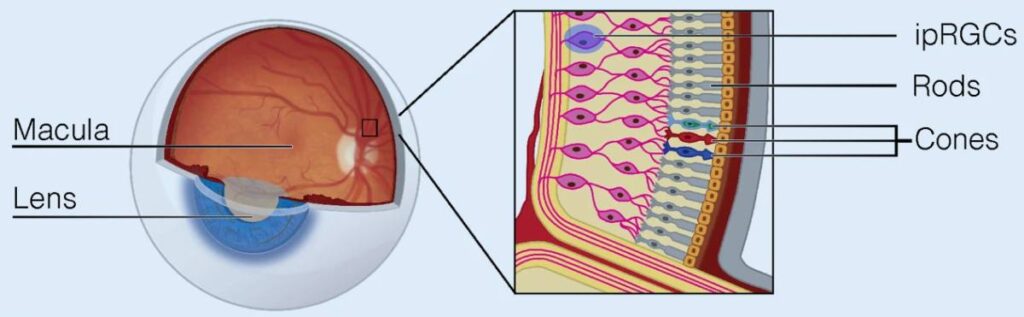
Ball pythons have far more rods than cones, by a ratio of roughly 10 to 1. That heavy load of rod cells is exactly what you’d expect from a night-active hunter.
It means they’re very good at picking up movement and shapes in dim light, even if the image is fuzzy and mostly colorless.
So in low light, like a dimly lit room at dusk, your ball python can see well enough to detect motion and tell light from dark. But in true, complete darkness with zero light, even those rod-packed eyes can’t do much. That’s where their real superpower kicks in… (keep reading!)
Their Heat Sensing Pits: Built-In Thermal Vision
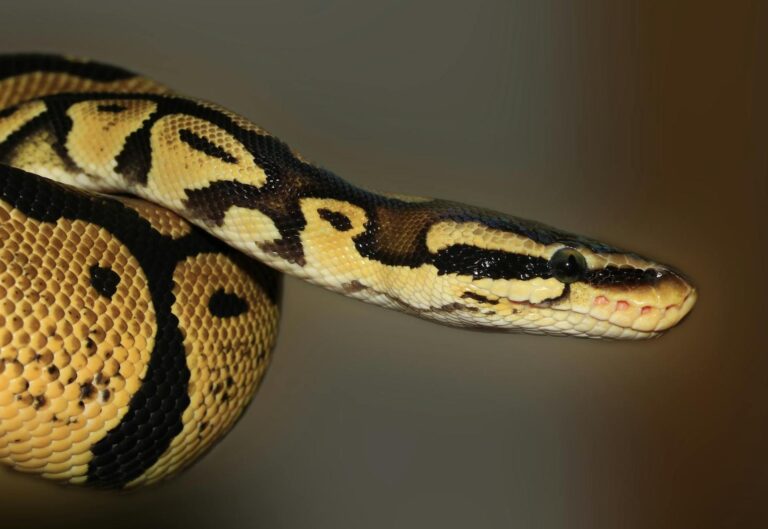
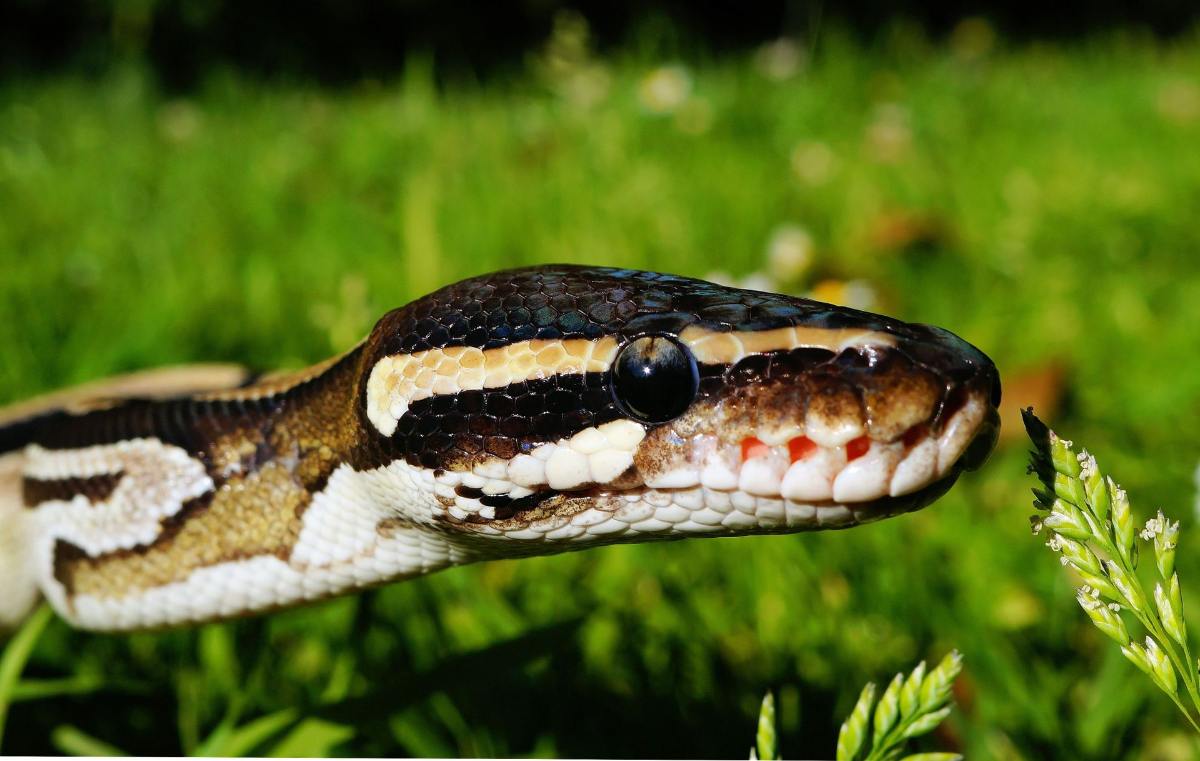
This is the part that blows people’s minds. Look closely at your ball python’s face, and you’ll notice small holes along the upper and lower lips, near the mouth.
Those are called pit organs, and they are essentially heat detectors.
Each pit organ contains a thin membrane that senses infrared radiation, the heat emitted by warm objects. And they are absurdly sensitive.
A ball python’s pits can detect temperature changes as tiny as a few thousandths of a degree. That sensitivity lets the snake build a kind of thermal image of its surroundings, picking out anything warmer than the background.
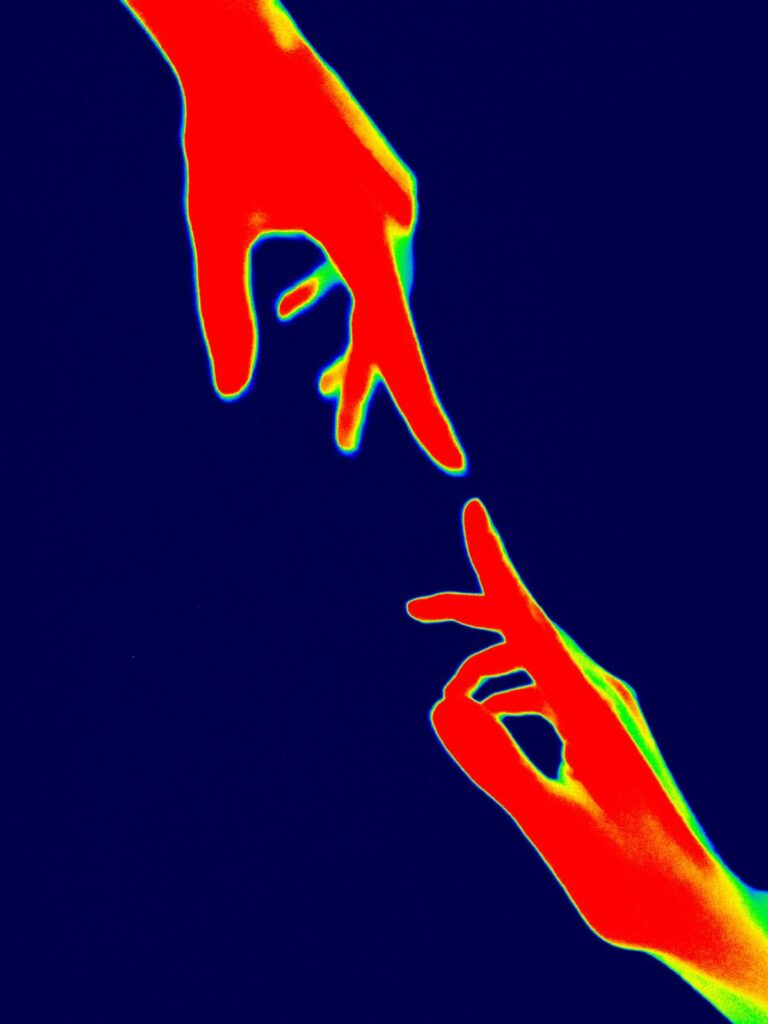
Think of it like the thermal vision goggles you’ve seen in movies. To your ball python, a warm mouse, or your warm hand, glows clearly against the cooler background of the enclosure, even in pitch-black darkness.
The snake doesn’t need a single photon of light to find a warm meal. This is how ball pythons hunt so effectively at night and why your snake tracks you across a dark room.
It’s not seeing you with its eyes. It’s sensing your body heat.
So when people ask can ball pythons see in the dark, the most accurate answer is that they perceive the dark using heat, not light. Their eyes handle dim light, and their pits handle total darkness.
What Colors Can Ball Pythons See?
Ball pythons don’t see color the way we do. With so few cone cells, their color vision is very limited, and they mostly perceive the world in shades of gray.
Interestingly, research suggests ball pythons may be able to detect some ultraviolet light, which helps them see in the low-light conditions of dawn and dusk.
But rich, vivid color vision like ours is something they do not have (Take that! Ball pythons haha). Detail and color simply aren’t important to an animal that hunts by heat and motion in the dark.
Do Ball Pythons Need a Light at Night?
This is the most important practical takeaway, and the answer is clear.
No, ball pythons do not need any light at night. They navigate and hunt in the dark using their heat-sensing pits and their low-light vision, so a night light does nothing helpful for them. Worse, it can actually cause problems.
Here’s why you should skip the night light:
They don’t need it to see. Their heat-sensing handles total darkness better than any light could. A night light solves a problem that doesn’t exist.
It disrupts their day and night cycle. Ball pythons need a consistent light schedule. Light at night confuses their internal clock and can stress them out over time, which can affect feeding and overall health.
Colored bulbs still bother them. Many new keepers buy red or blue night bulbs, thinking the snake can’t see them.
But ball pythons can perceive these colors, so a colored night bulb still disrupts their natural rhythm. There’s no truly invisible light for them.
The rule is simple. Lights on during the day, lights off at night. Give your snake true darkness when the lights go out.
A simple outlet timer makes keeping a consistent day and night cycle effortless, so you never have to remember to flip the lights.
What This Means for Your Ball Python’s Setup
Understanding how ball pythons see in the dark actually shapes a few important care decisions.
Heat matters more than light. Since your snake senses the world partly through heat, proper temperatures aren’t just about digestion; they’re part of how your snake experiences its enclosure.
Ball pythons need a warm side around 88 to 92°F and a cooler side around 78 to 80°F. Use a reliable thermostat to keep your heat source steady and safe, and check your temperatures with an infrared temp gun so you know they’re accurate.
Give them dark hiding spots. Ball pythons are shy, nocturnal ambush predators that feel safest in snug, dark hides.
Provide at least one hide on the warm side and one on the cool side so your snake can pick the temperature it wants while still feeling secure.
A stressed ball python that has nowhere to hide is a ball python that often refuses to eat.
Feed in the evening. Since ball pythons are nocturnal hunters, they’re far more likely to strike and eat when offered food in the evening or after the lights go down.
Feeding a warm, properly thawed rodent in low light works with their instincts, since the warmth lights up their heat pits and triggers the feeding response.
Skip the night lights entirely. Save your money. You don’t need a red bulb, a blue bulb, or any nighttime light. Put that budget toward things that actually matter, like a good thermostat and proper hides.
Frequently Asked Questions
Can ball pythons see in complete darkness?
With their eyes, no, not in total darkness. But they don’t need to. Ball pythons use heat-sensing pit organs to detect warm objects in complete darkness, which works like thermal vision.
So while they can’t visually see in a pitch-black room, they can absolutely sense warm prey, or you, through body heat alone.
How do ball pythons hunt in the dark?
Ball pythons hunt using a combination of low-light vision, an excellent sense of smell, and, most importantly, their heat-sensing pit organs.
The pits detect the body heat of warm-blooded prey like rodents, letting the snake locate and strike accurately even in total darkness.
Can my ball python see me at night?
In a dimly lit room, your ball python can see your movement with its eyes. In complete darkness, it can still sense you through your body heat using its pit organs.
So yes, your snake is aware of you at night, just mostly through heat rather than sight.
Do ball pythons have good eyesight?
Not really, at least not by our standards. Ball python eyesight is blurry and nearsighted, and they see mostly in shades of gray.
Their eyes are tuned to detect movement and dim light rather than fine detail or color. They make up for weak eyesight with heat sensing and a strong sense of smell.
Should I use a red night light for my ball python?
No. Ball pythons can perceive red and blue light, so these bulbs still disrupt their natural day and night cycle. They don’t need any light to see in the dark thanks to their heat pits. Keep the enclosure dark at night and provide light only during the day.
Conclusion
Here’s a quick recap of what we covered.
Can ball pythons see in the dark? In a way, yes, but not with their eyes. In low light, their rod-packed eyes detect movement and shapes, though their vision is blurry and mostly colorless. In total darkness, they rely on heat-sensing pit organs that work like built-in thermal vision.
Those pit organs can detect tiny changes in heat, letting your snake sense warm prey, and you, in complete blackness, without any light.
Ball pythons are nocturnal ambush predators, which is exactly why they evolved this heat-sensing ability for hunting at night.
They do NOT need a night light. Their heat-sensing handles the dark better than any bulb, and light at night, including red or blue, disrupts their natural rhythm. Keep their enclosure dark at night and lit during the day.
Next time you catch your ball python tracking you across a dark room, you’ll know it’s reading your body heat like a thermal camera. Pretty incredible for a snake that’s just chilling in its enclosure.
Curious to also learn about a leopard gecko’s exceptional night vision? Check out this article!
Got questions about your ball python’s setup or behavior? Drop them in the comments below! Catch ya in the next one! and hope you learned something new!! 🙂
Recommended Products Mentioned in This Post
Outlet Timer — Automates your snake’s day and night light cycle so you never have to remember.
Reptile Thermostat — Keeps the warm side at a safe, steady temperature, which matters a lot for a heat-sensing snake.
Infrared Temperature Gun — Quickly check that your warm and cool side temperatures are accurate.