Can Leopard Geckos Live Together? (What You Need to Know First)

This post may contain affiliate links, meaning I may earn a small commission at no extra cost to you if you make a purchase through my links. This helps support the blog! You can read my full Affiliate Disclaimer for more details.
Introduction
It’s a really common thought. You have one leopard gecko, you love it, and now you’re wondering if it would be happier with a buddy, OR if you can save some money and space by keeping two in one enclosure. So can leopard geckos live together?
Or actually, the better question is,… should you?
Here’s the honest answer. Leopard geckos are solitary animals and do NOT need a companion to be happy. In most cases, the safest choice by far is to house each leopard gecko in its own enclosure.
That said, there are a few specific situations where cohabitation can work, mainly with two females in a large, properly set up enclosure, but it always comes with real risks that you need to understand before you try it.
I want to be real with you in this post because bad housing advice gets leopard geckos hurt every year. I know, it’s sad :((.
So I’ll walk you through which pairings are safe, which are dangerous, the one combination you must never do, how to set things up if you do decide to cohab, and the warning signs that mean you need to separate them immediately.
Do Leopard Geckos Get Lonely?
Let’s clear up the biggest myth first, because it’s usually the reason people want to house geckos together in the first place.
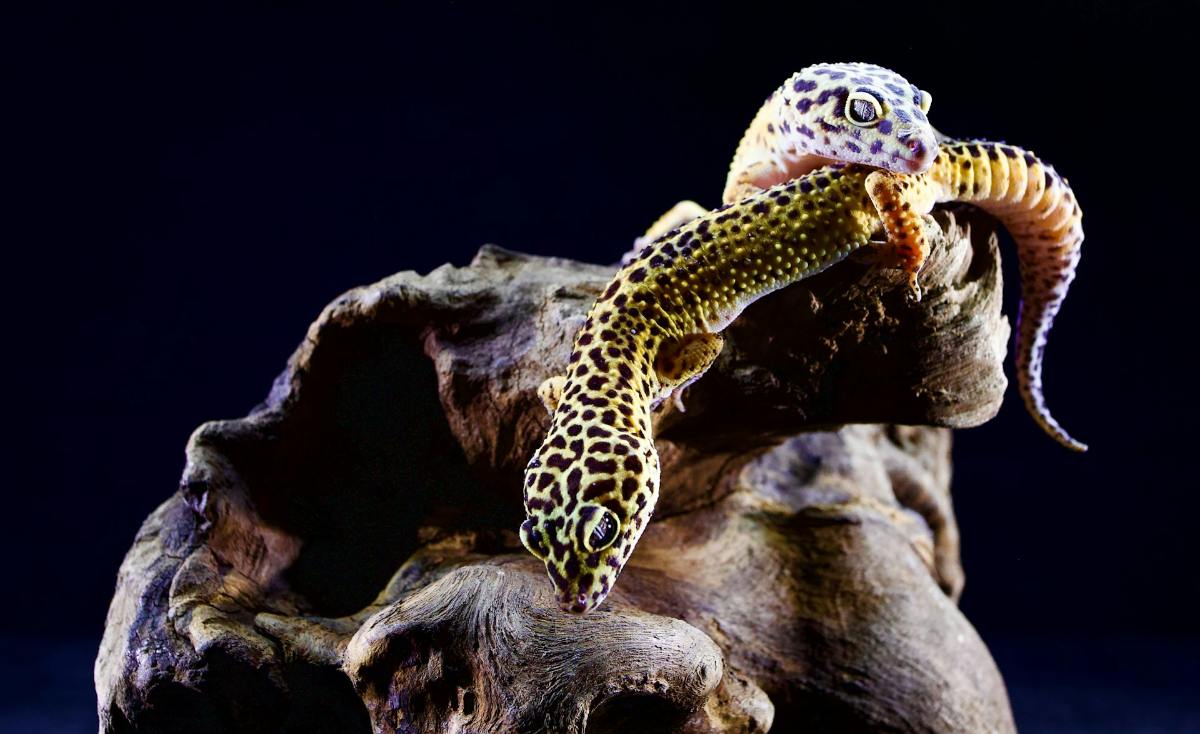
Leopard geckos do not get lonely. They are naturally solitary and asocial animals. In the wild, they live alone and only come together to breed.
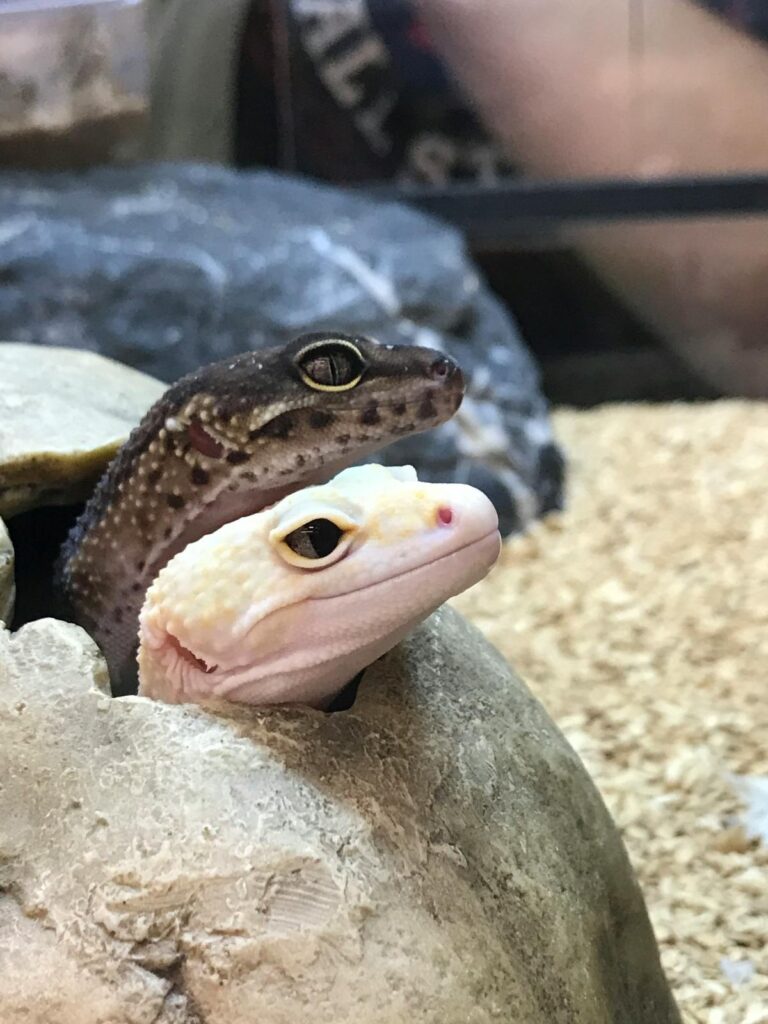
They don’t form friendships, they don’t crave company, and they don’t benefit emotionally from having a roommate. This is completely different from social animals like dogs or even some birds.
So if you’re thinking about getting a second gecko because you feel bad that yours is “alone,” you can let that worry go.
Your leopard gecko is perfectly content on its own. It actually prefers it that way. Housing two geckos together does not make either one happier.
If anything, it can stress them out because now they have to compete for food, warmth, and hiding spots that they’d rather have all to themselves.
Cohabitation is something people do for their own convenience or preference, like saving money or space, not something done for the gecko’s benefit. Once you understand that, you can make a clear decision.
The Gender Rules: Which Leopard Geckos Can Live Together?
If you do decide to house leopard geckos together, gender is the single most important factor. Let me break down each possible pairing.
Two Males: Never
This is the one hard, no exceptions rule of leopard gecko cohabitation. NEVER house two adult males together. Male leopard geckos are extremely territorial and will fight any other male that shares their space.
These are not gentle squabbles. These fights can lead to serious injury and even the death of one of them.
And here’s the important part that trips people up. This rule applies even if the two males were raised together from hatching, even if they’re siblings, and no matter how big the enclosure is or how many hides you provide.
Males may seem fine as juveniles, but once they hit sexual maturity, their hormones kick in and they will start fighting. So two males is always a no. Full stop.
Two Females: Sometimes, With Caution
Two females are the safest multi-gecko arrangement, but I want to be honest with you, because you’ll see conflicting advice online about this one.
Some sources say female cohabitation is generally fine, but others warn strongly against it. The truth is somewhere in between.
Adult females are far less territorial than males, and in many cases, two females of similar size will coexist without serious fighting in a large, well-set-up enclosure. However, females can still have dominance disputes, and some individuals simply won’t tolerate another gecko in the same enclosure.
One female can bully the other, hogging the best hides, the warm spot, and the food, which slowly stresses and starves the weaker gecko, even if you never see them physically fight.
So two females can work, but it’s never guaranteed, and it requires the right setup plus constant monitoring. Even a pair that gets along fine for months can suddenly start fighting with no warning. This is why you always need a backup enclosure ready to go.
Male and Female: Only for Intentional Breeding
A male and a female housed together will breed. It’s that simple. If you put them together permanently, the male will repeatedly try to mate with the female, which physically wears her down and stresses her out.
Constant breeding and egg-laying take a serious toll on a female’s body and can shorten her lifespan.
So a male and female should only ever be housed together if you are an experienced keeper intentionally running a breeding program, and even then, most breeders rotate the male in for supervised sessions rather than housing the pair together full time.
If you’re not deliberately breeding, keep males and females separate. Otherwise, you’ll end up with stressed animals and clutches of eggs you may not be prepared for.
Juveniles: Temporarily, But Plan Ahead
You might wonder why pet stores keep a dozen baby leopard geckos piled together in one tank. The answer is that juveniles can be housed together temporarily because they haven’t hit sexual maturity yet, so the territorial and breeding instincts haven’t kicked in.
But this is short-term only. As they grow up, those instincts switch on, and you’ll need to separate them, especially before you end up with two mature males in one tank. So never assume a group of juveniles can stay together long term.
One more critical point on juveniles. Never house different sizes together. A larger leopard gecko will always dominate the food and resources. Only ever consider housing geckos of very similar size.
If You Do Cohab: How to Set It Up Safely
If you’ve already thought through and understand the implications of cohabitation and still want to house two females together, here’s how to give them the best possible chance of getting along.
Doing this halfway is how geckos get hurt, so if you’re going to do it, do it right.
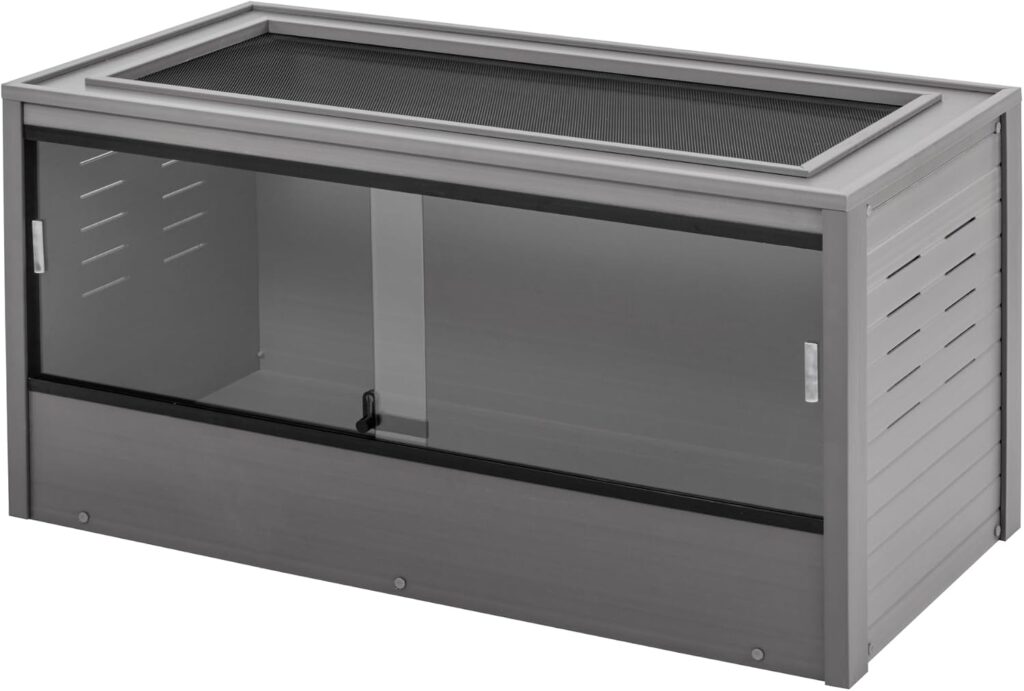
Use a large enclosure. Two females need much more space than one gecko. A 75-gallon equivalent footprint is the practical bare minimum for two, and honestly, bigger is better.
A larger enclosure like a 48 inch front opening Mojave Reptile Lounge gives each gecko room to establish her own territory and get away from the other when she wants space.
Provide duplicate hides for each gecko. This is huge. Every gecko needs her own warm hide, cool hide, and moist hide, so a pair needs at least six hides total, all with clear, unobstructed access.
If there’s only one good warm hide, the dominant gecko will claim it and the other suffers. Give them so many hides and options that there’s nothing to fight over.
Stock up on plenty of reptile hides and a couple of moist hides so both geckos always have somewhere to retreat.
Feed them separately. Food competition is one of the biggest sources of conflict. The safest approach is to feed each gecko separately, ideally by hand or in a separate container outside the main tank, so one gecko can’t dominate all the food or accidentally bite the other during a feeding frenzy.
Make sure the temperature gradient works for both. Both geckos need access to a proper warm side around 90°F and a cool side around 75°F without having to compete for it. Check your temps with a temperature gun so you know both ends of the tank are correct.
Always have a backup tank ready. I can’t stress this enough. Keep a second enclosure set up and ready at all times. Leopard gecko relationships can break down suddenly, and if fighting starts, you need to separate them instantly, not scramble to buy a tank while one gecko is getting injured.
Warning Signs You Need to Separate Them Immediately
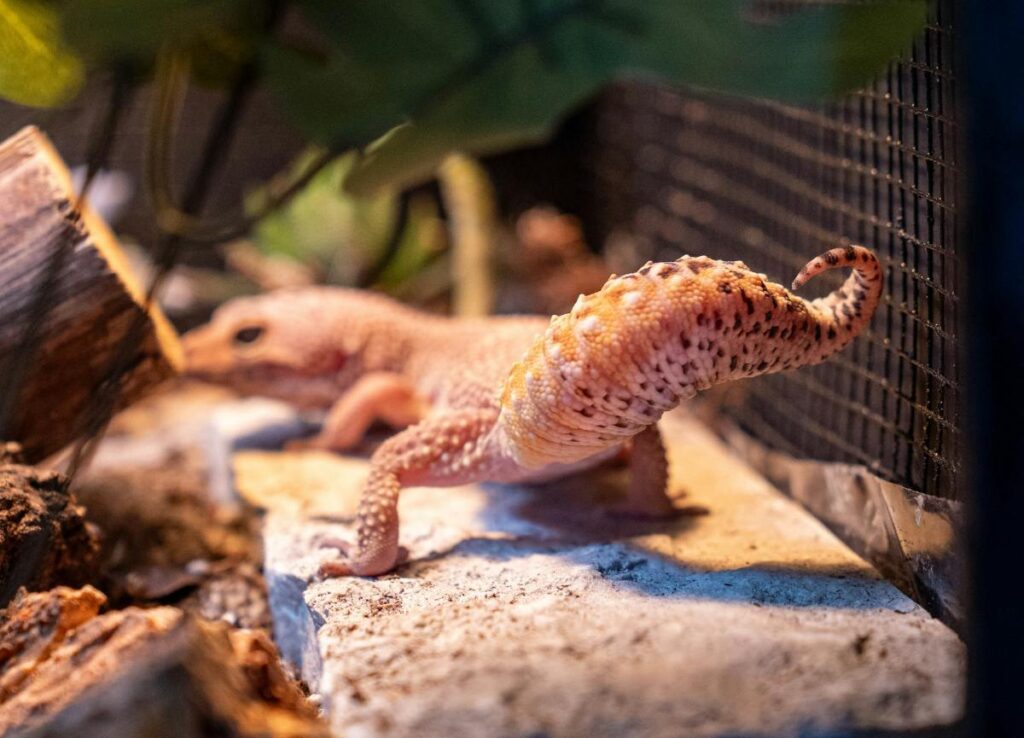
If you house geckos together, you have to watch them closely, especially for the subtle signs, because a lot of cohabitation problems are quiet rather than obvious brawls. Separate your geckos right away if you notice any of these:
- Any actual fighting, biting, or lunging
- Tail waving or rapid tail movements, which can signal aggression or stress
- One gecko consistently blocking the other from food, the warm spot, or hides
- One gecko losing weight or having a visibly thinner tail than the other
- Bite marks, wounds, or a dropped tail
- One gecko hiding constantly and seeming stressed, or refusing to eat
- Skin discoloration or other stress signs in the submissive gecko.
Remember, the bullying is often silent. You might never see a fight, but if one gecko is slowly being pushed away from resources, it’s being harmed just the same.
Weigh both geckos regularly with a digital scale so you catch weight loss early, since that’s often the first sign one gecko is being outcompeted.
My Honest Recommendation
After all of that, here’s my honest take.
Just house your leopard geckos separately. It’s the safest, simplest, least stressful option for the geckos, and it removes all the risk of injury, bullying, and sudden fighting. Your gecko will not be lonely or sad about it. It genuinely prefers its own space.
Two separate, well-equipped enclosures cost a little more and take up more room, but they give you two healthy, low-stress geckos that you can monitor individually, and that’s worth far more than the space or money you’d save by cramming them together.
If you want the experience of multiple geckos, giving each its own home is the way to do it right.
If you specifically want a communal reptile you can keep in a small group, look into mourning geckos instead. They actually do well kept in small colonies, unlike leopard geckos.
Frequently Asked Questions
Do leopard geckos need a companion?
No. Leopard geckos are solitary, asocial animals that do not get lonely and do not need a companion. They’re perfectly happy and healthy living alone, and in fact prefer it. Adding a second gecko is done for the keeper’s convenience, not the gecko’s well-being.
Can two female leopard geckos live together?
Sometimes, and it’s the safest multi-gecko pairing, but it’s never guaranteed. Two similarly sized females in a large enclosure with duplicate hides and separate feeding can often coexist, but dominance and bullying are still possible, and fights can break out suddenly. Constant monitoring and a backup tank are essential.
Can two male leopard geckos live together?
No, never. Two males will fight, causing serious injury or death, and this is true even for siblings raised together, regardless of enclosure size. Two males must always be housed separately.
Will a male and female leopard gecko breed if housed together?
Yes. A male and female housed together will breed repeatedly, which stresses and physically wears down the female. They should only be housed together by experienced keepers intentionally breeding, and even then, usually only for supervised sessions rather than full-time.
What size tank do two leopard geckos need?
The practical minimum for two females is a 75 gallon equivalent footprint, though bigger is strongly recommended.
Conclusion
Here’s a quick recap of what we covered.
Can leopard geckos live together? In a few specific cases, yes, but they don’t need to and usually shouldn’t. Leopard geckos are solitary animals that don’t get lonely.
Two males must never be housed together, as they’ll fight to the point of injury or death, even siblings. A male and female will breed and should only be paired by intentional breeders. Two similarly sized females are the safest pairing but still carry real risk of bullying and sudden fighting.
If you do cohab two females, use a large enclosure, provide duplicate hides for each gecko, feed them separately, keep the temperatures right, and always have a backup tank ready.
Watch closely for warning signs like fighting, weight loss, or one gecko being pushed away from resources, and separate immediately if you see them.
Honestly, the simplest and safest choice is to give each leopard gecko its own enclosure. Your gecko won’t mind one bit, and you’ll have two healthy, stress free animals instead of a risky situation.
Thinking about a second gecko? Give it its own home and you can’t go wrong. Got cohabitation questions or a story to share? Drop it in the comments below! Catch you in the next one 🙂
Recommended Products Mentioned in This Post
48 Inch Front-Opening Mojave Reptile Lounge Enclsoure — Gives two female geckos enough space to establish separate territories.
Moist Hide — Each gecko needs its own for healthy shedding.
Temperature gun — Confirm both ends of the tank have the right temperature gradient.
Digital Scale — Weigh both geckos regularly to catch early signs one is being outcompeted.