Why Won’t My Leopard Gecko Eat Mealworms? (11 Reasons and Fixes)

This post may contain affiliate links, meaning I may earn a small commission at no extra cost to you if you make a purchase through my links. This helps support the blog! You can read my full Affiliate Disclaimer for more details.
Introduction
There’s nothing more stressful as a new leopard gecko owner than watching your gecko ignore its food. You drop a mealworm in the dish, your gecko looks at it, maybe even licks it, and then just walks away. What’s going on?!?!
If you’re asking yourself why your leopard gecko won’t eat mealworms, the good news is that most of the time, it’s something simple and fixable.
It could be the temperature in the tank, the size of the mealworms, stress, shedding, or just your gecko being a picky eater. The trickier news is that sometimes it points to a health problem that needs a vet to solve.
In this post, I’ll walk you through all 11 reasons a leopard gecko won’t eat mealworms, how to tell which one you’re dealing with, and exactly what to do about each. I’ll also cover when it’s time to stop troubleshooting at home and call a reptile vet.
First, Don’t Panic: Leopard Geckos Can Go a While Without Food
Before we dig into the reasons, take a breath. Leopard geckos are desert animals built to survive periods without food. They store fat in their tails, which acts like a backup fuel tank. A healthy adult can go a week or even two without eating and be completely fine.
So if your gecko skipped a meal or two, that alone is not an emergency. What you’re watching for is a pattern: prolonged refusal to eat, combined with weight loss, especially a thinning tail, or other symptoms like lethargy. That combination is what tells you something is actually wrong.
Now, let’s go through why your leopard gecko won’t eat mealworms, starting with the most common and easiest to fix reasons.
1. The Tank Is Too Cold

This is the number one reason, hands down. Leopard geckos are cold-blooded, which means they rely on heat from their environment to digest food.
If their warm side isn’t hot enough, their metabolism slows down, and they simply don’t feel hungry, because their body knows it can’t digest a meal properly.
Your leopard gecko needs a warm side surface temperature of around 90 to 95°F. If it’s colder than that, then fixing the heat will very often get your gecko eating again almost immediately.
The problem is that cheap stick-on thermometers are notoriously inaccurate, so you might think your temps are fine when they’re actually way off.
Check your warm side with a reliable infrared temp gun. If your temps are low, make sure your heat source is working and connected to a thermostat so it stays steady.
This is genuinely the first thing you should check every single time your leopard gecko won’t eat. It solves the problem more often than anything else on this list.
2. The Mealworms Are Too Big
Leopard geckos have a simple rule for prey size. The food should be no bigger than the space between their eyes. If a mealworm is too large, your gecko may refuse it because it instinctively knows it could be a choking hazard or hard to digest.
This is especially common with baby and juvenile geckos being offered adult-sized mealworms. The fix is easy. Offer smaller, younger mealworms that are appropriately sized for your gecko. If all you have are big ones, switch to a smaller feeder until you can get the right size.
3. Your Gecko Is About to Shed
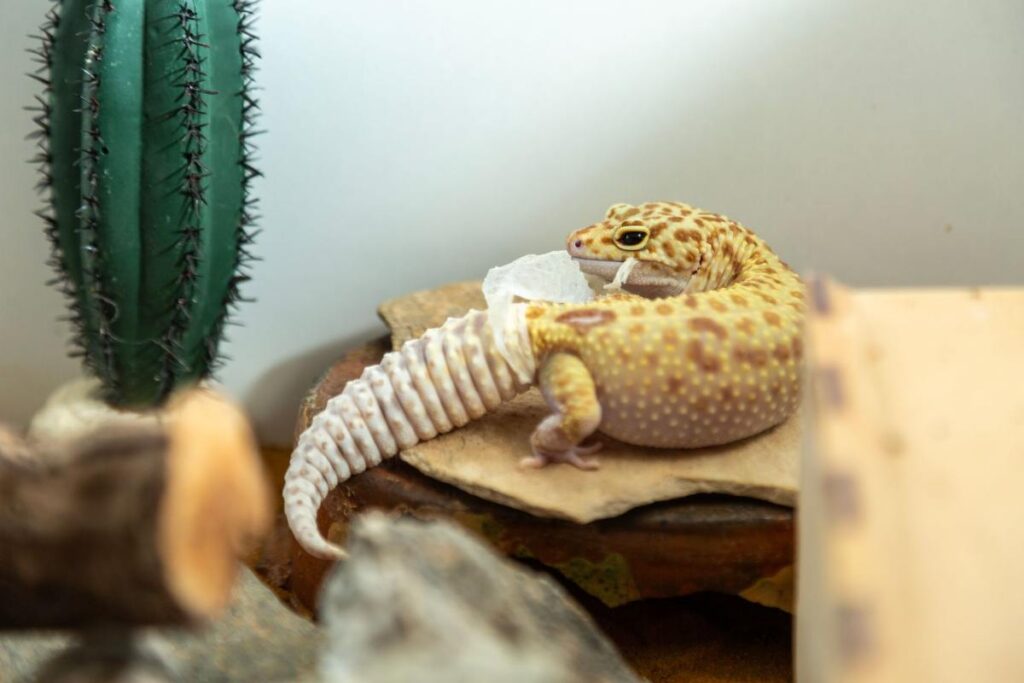
Leopard geckos often lose their appetite right before a shed. If you notice your gecko’s skin looking dull, gray, or whitish, a shed is on the way, and that’s likely why they’re not interested in mealworms.
This is completely normal and nothing to worry about. Just wait it out. Your gecko’s appetite will usually bounce right back after they finish shedding, which often happens within a day or two.
Make sure they have a proper moist hide to help the shed go smoothly. If you want to learn more, check out my guide on whether leopard geckos need a moist hide.
4. Your Gecko Is Stressed
Stress is a huge appetite killer for leopard geckos. A stressed gecko will often refuse food entirely, even food they normally love. Common causes of stress include:
- A new home or recently moving the tank
- A brand new gecko needs one to two weeks to settle in before they feel safe enough to eat
- Too much handling, especially with a new gecko
- Changes to their enclosure, like new decor or a new substrate
- A tank that’s too small or doesn’t have enough hides
- A cage mate bullying them, which is one of many reasons you should never house leopard geckos together.
The fix is to minimize stress. If your gecko is new, leave them alone for a week or two with food available and limited handling. Make sure they have at least three hides so they feel secure. Keep their environment calm and consistent.
5. Your Gecko Has Become a Picky Eater
Here’s a big one that catches a lot of keepers off guard. If you’ve been feeding your gecko fatty treat insects like waxworms or butterworms, your gecko may have developed a taste for them and now refuses plain mealworms. It’s like a kid who fills up on candy and then turns their nose up at dinner.
Waxworms in particular are basically gecko junk food. They’re high in fat and very tasty, so geckos get hooked on them fast.
If this sounds like your situation, the fix is tough love. Stop offering the fatty treats completely. Keep offering mealworms or another staple feeder and wait your gecko out.
Remember, a healthy gecko can go a week or two without eating. When they get hungry enough, they’ll almost always cave and eat the staple food. Don’t give in and offer a waxworm, or you’ll just reinforce the pickiness.
6. The Mealworms Aren’t Moving
Leopard geckos are hunters. Their feeding instinct is triggered by movement. If your mealworms are sitting dead still in a dish, or worse, are actually dead, your gecko may not even recognize them as food.
To fix this, make sure you’re offering live, active mealworms. If they’re being sluggish, you can try feeding by hand or with feeding tongs, wiggling the mealworm gently in front of your gecko to trigger the feeding response. A lot of geckos that ignore a still dish of mealworms will happily snap at one that’s moving.
Some geckos do learn to eat from a dish, but if yours hasn’t, tong feeding is your friend.
7. You’re Feeding at the Wrong Time
Leopard geckos are crepuscular, meaning they’re most active at dawn and dusk.
If you’re trying to feed your gecko in the middle of the day when they’re sleeping, or with bright lights on, they’re probably just not awake and hungry yet.

Try offering food in the evening when the lights are dimming, and your gecko naturally becomes more active. This small timing change makes a surprising difference for many geckos.
8. The Mealworms Are Low Quality or Spoiled
Sometimes the problem is the mealworms themselves, not your gecko. Old, dead, sick, or improperly stored mealworms can smell off or lack nutrition, and your gecko may refuse them for good reason.
Inspect your mealworms before feeding. Toss any that are dead, discolored, or smell bad. Buy fresh, lively mealworms from a reputable source and store them properly in the fridge to keep them fresh. If your batch looks rough, that alone could be why your leopard gecko won’t eat the mealworms you’re offering.
9. Your Gecko Is Overfed or Simply Not Hungry
It’s worth remembering that adult leopard geckos don’t need to eat every day. Adults usually eat every two to three days, not daily. If you’re offering food every single day and your gecko skips some, that might just be normal. They’re not hungry yet.
Babies and juveniles eat daily because they’re growing, but once your gecko is an adult, space out their feedings. A gecko that refuses food simply because it’s full is not a problem at all.
10. Brumation
Brumation is a kind of reptile hibernation. During the cooler, darker months, some leopard geckos naturally slow down and lose their appetite for weeks or even a couple of months. This is more common in geckos exposed to seasonal changes in temperature and light.
If it’s winter, your gecko is otherwise healthy, maintaining most of their weight, and just less interested in food, brumation could be the explanation.
Keep offering food occasionally, monitor their weight, and make sure your temperatures are still correct. Not every gecko brumates, but it’s a normal possibility to be aware of.
11. A Health Problem
This is the reason nobody wants to hear, but it’s important. If you’ve ruled out all the simple causes above and your leopard gecko still won’t eat mealworms, a health issue could be to blame. Possible problems include:
- Impaction, which is a digestive blockage, sometimes caused by swallowing loose substrate or eating prey that’s too large
- Parasites or an infection
- Metabolic bone disease, often from a lack of calcium, vitamin D3, or UVB
- Mouth rot or another mouth infection
- General illness or an injury
Warning signs that point to a health problem include significant weight loss, a noticeably thinning tail, lethargy, sunken eyes, weakness, twitching or tremors, straining without pooping, or keeping the eyes closed a lot. If you see any of these along with the refusal to eat, it’s time to see a vet.
How to Get Your Leopard Gecko Eating Again: Quick Action Plan
Here’s a simple step-by-step approach to work through when your leopard gecko won’t eat mealworms.
First, check your warm side temperature with an accurate thermometer and make sure it’s 90 to 95°F. This alone fixes the problem most of the time.
Second, check if your gecko is about to shed. If the skin looks dull or gray, just wait it out.
Third, make sure the mealworms are the right size, alive, moving, and fresh. Try tong feeding to trigger the hunting response.
Fourth, feed in the evening when your gecko is naturally active.
Fifth, reduce stress. If your gecko is new or you recently changed something, give them space and time.
Sixth, if you’ve been spoiling them with waxworms, cut those out and wait for hunger to win.
Seventh, weigh your gecko regularly with a small digital kitchen scale to track whether they’re actually losing weight or holding steady. This is the single best way to know how worried you should be.
If none of this works after a week or two, or if you see any of the health warning signs, get your gecko to a reptile vet as soon as possible.
A Better Long Term Approach: Feed Variety, Not Just Mealworms
Mealworms shouldn’t be the only thing your leopard gecko eats anyway. They’re high in fat and have a tough exoskeleton that’s harder to digest, which can contribute to constipation or impaction if fed as the sole diet.
A healthier approach is to rotate a variety of feeder insects. Good staples include crickets, dubia roaches, and black soldier fly larvae, also sold as Phoenix worms or Calci worms.
You can offer mealworms and superworms as part of the rotation, and save waxworms and butterworms strictly as occasional treats.
Whatever you feed, gut load your insects before feeding and dust them with calcium and reptile multivitamin on a rotating schedule. A varied, properly supplemented diet keeps your gecko healthier and makes picky eating much less likely in the first place.
Frequently Asked Questions
How long can a leopard gecko go without eating?
A healthy adult leopard gecko can go one to two weeks without eating, thanks to the fat stored in its tail. Babies and juveniles have less reserve and shouldn’t go more than a few days. If your gecko refuses food beyond two weeks, or is losing weight, see a vet.
Why does my leopard gecko lick the mealworm but not eat it?
Licking is how leopard geckos investigate their food using scent.
If they lick a mealworm and then walk away, they’re usually either not hungry, not in a feeding mood, stressed, or about to shed. Check your temperatures and try again in the evening when they’re more active.
Should I be worried if my leopard gecko won’t eat mealworms but seems healthy?
Not immediately. If your gecko is active, holding its weight, and otherwise normal, a short hunger strike is usually fine.
Work through the common causes like temperature, prey size, shedding, and stress. Only worry if it goes on for more than a couple of weeks or comes with other symptoms.
Why won’t my leopard gecko eat mealworms, but eats other insects?
This is almost always picky eating or a simple preference. Some geckos just like crickets or dubia roaches more than mealworms. As long as they’re eating something nutritious and varied, that’s totally fine. Variety is actually healthier than a mealworm-only diet.
Will my leopard gecko starve itself?
In nearly all cases, no. A healthy leopard gecko will not starve itself to death when food is available. When they get hungry enough, they eat. This is why tough love works for picky eaters.
The exception is a sick gecko, where the refusal to eat is a symptom of illness rather than stubbornness, which is why monitoring weight and symptoms matters.
Conclusion
Here’s a quick recap of what we covered.
If your leopard gecko won’t eat mealworms, don’t panic. Geckos can safely go one to two weeks without food.
The most common and fixable reasons are cold temperatures, mealworms that are too large, an upcoming shed, stress, picky eating, still or dead prey, feeding at the wrong time, low-quality mealworms, simply not being hungry, and brumation.
Always check your warm side temperature first. It needs to be between 90 to 95°F, and this often resolves the problem more often than anything else.
If you’ve worked through all the simple causes and your gecko still won’t eat, or if you see weight loss, a thinning tail, lethargy, or other symptoms, it’s time to see a reptile vet!
Long term, feed a variety of insects rather than mealworms alone, and always gut load and supplement them. A varied diet keeps your gecko healthier and prevents picky eating from the start.
Hang in there!! In most cases, a leopard gecko that won’t eat mealworms is an easy fix once you find the cause. Got a picky eater of your own? Drop your story in the comments below! Catch you in the next one!! 🙂
Recommended Products Mentioned in This Post
Infrared Temp Gun — Fast way to spot check temperatures anywhere in the enclosure.
Inkbird Thermostat — Keeps your heat source steady at the right temperature for digestion.
Digital Kitchen Scale — Track your gecko’s weight to know whether a hunger strike is harmless or a concern.
Miner-All Calcium and multivitamin Powder — Dust feeders to support healthy bones and prevent metabolic bone disease.